
Why So Many Business Owners Start With Cost Cutting
It is not hard to understand why so many business owners look at AI and think about savings first. Labor is expensive. Time is scarce. Customers expect faster responses than ever. Most small and midsize companies already feel stretched, so when AI shows up promising quicker replies, less admin work, fewer missed leads, and more output from the same team, the appeal is immediate.
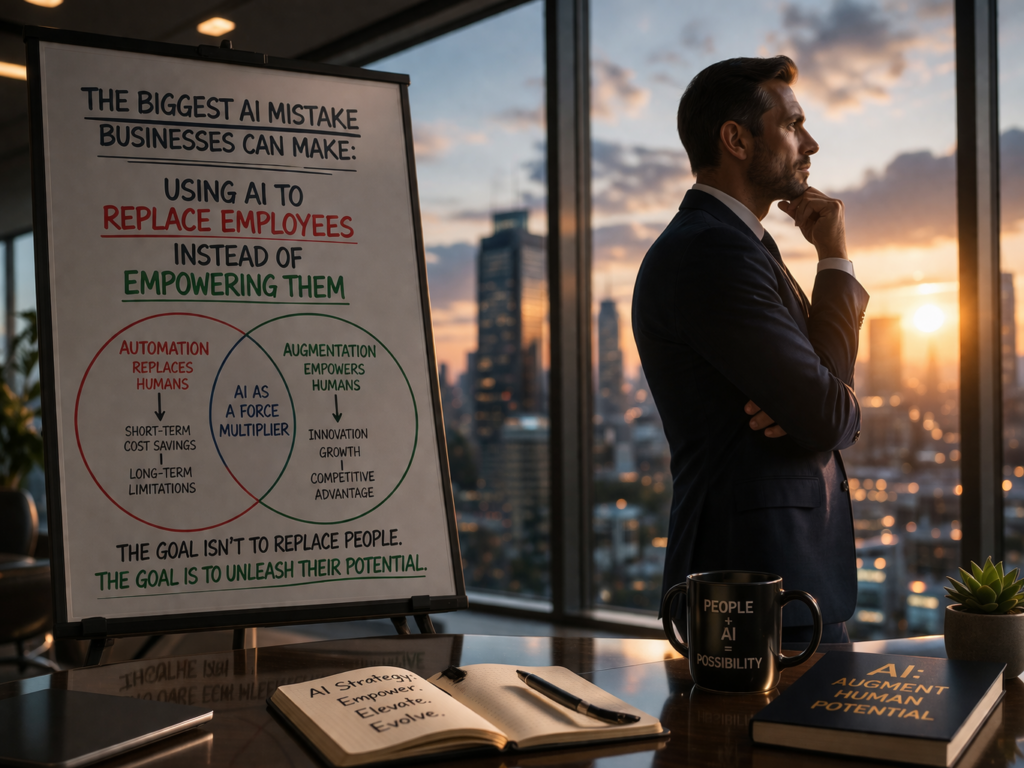
It feels like leverage.
And in many cases, the numbers make that instinct look completely reasonable. IBM says mature AI adopters in customer service reported a 38% lower average inbound call handling time and a 17% higher customer satisfaction percentage. That is a rare combination: less time spent and better service at the same time.
So the first AI conversation inside a lot of businesses becomes very simple. How much time can we save? How much repetitive work can we remove? How much pressure can we take off the team? And, yes, how much labor can we reduce or redeploy? IBM found that 47% of surveyed CEOs expected generative AI to reduce or redeploy parts of their workforce within 12 months.
That instinct is not irrational.
AI really is good at routine work. It can answer common questions, summarize calls, draft emails, log notes, send reminders, route inquiries, and handle a long list of repetitive tasks that drain time without adding much human value. For a business owner buried in day-to-day fires, that does not feel like hype. It feels like oxygen.
And that is exactly why cost cutting becomes the first lens.
It is immediate.
It is measurable.
It looks good on a spreadsheet.
But there is a danger in stopping there. In the transcript, that deeper tension comes through clearly: one mindset sees the business through efficiency and cost reduction, while another sees it through opportunity, value, and growth. Both matter. But when efficiency becomes the whole story, the business starts asking smaller questions.
That is the trap.
AI is so good at saving time and reducing labor that it almost dares companies to think too small. It pushes them to ask, “What can we cut?” before they ask the far better question: “What can we now do for customers that used to be too slow, too expensive, or too difficult?”
That is the difference between using AI to make a business thinner and using AI to make a business stronger.
Cost cutting is the obvious starting point. But it should never be the final ambition.
Cost Cutting Is Not a Strategy
This is where many business owners go wrong. They see AI save money, and they start treating that savings as the strategy itself. It is not. Saving money can help a business. Sometimes it is necessary. Sometimes it is smart. But it does not answer the bigger question of how the business will grow, win, and stand apart.

That is the danger.
In the transcript, the core tension is clear: one mindset looks at the world through efficiency and cost reduction, while the other looks at it through opportunity and customer value. Both matter. No company can ignore cost forever. But once cost cutting becomes the main lens, businesses start making decisions that look smart on paper while quietly making the customer experience worse.
And that happens more easily than people think. A company removes phone support. It pushes people into self-service. It automates every interaction it can. It strips out staff wherever possible. The spreadsheet improves. The business feels leaner. But the customer now waits longer, gets less clarity, and feels more like a number than a person.
That is the problem.
A cost is easy to see.
A lost opportunity is not.
A customer who gives up because getting help was annoying does not always show up clearly in the monthly numbers. A lead who disappears because the experience felt cold or confusing does not arrive with a label that says, “This was caused by over-automation.” But the loss is real all the same.
That is why cost cutting is such a dangerous north star.
It pulls a business toward what is cheapest, not what is best. It encourages leaders to celebrate what they removed instead of focusing on what they improved. And over time, that can hollow out the very thing customers were paying for in the first place.
If you position yourself as better, faster, more premium, or more personal, this gets even more dangerous. As the transcript points out, if a company charges more because it is supposed to be better, then cutting service too far creates immediate dissonance. The customer feels it right away. Why am I paying more to be treated worse?
That is the trap AI creates so easily. It makes cutting faster. Easier. More tempting.
But a thinner business is not always a stronger one.
The smarter question is not just, “Where can AI reduce cost?” The smarter question is, “Where can AI reduce friction without reducing value?” That is a very different standard. It forces a business to protect what matters while removing what does not.
Cost reduction is a tool.
It is not a vision.
It is not a strategy.
The businesses that win with AI will understand that difference early.
Use AI to Make the Customer Experience 10x Better. Empower Employees, Don’t Just Replace Them.
This is where the real opportunity begins, and it is where many businesses will think too small. They will use AI to save money, reduce staff pressure, and automate routine work, which is fine as far as it goes. But that is only the first layer. The bigger opportunity is to take that time, margin, and operational relief and turn it into something the customer can actually feel. Faster replies. Better follow-up. Smoother handoffs. Clearer communication. Less waiting. Less confusion. A company that feels easier to deal with. That is where AI becomes truly powerful.
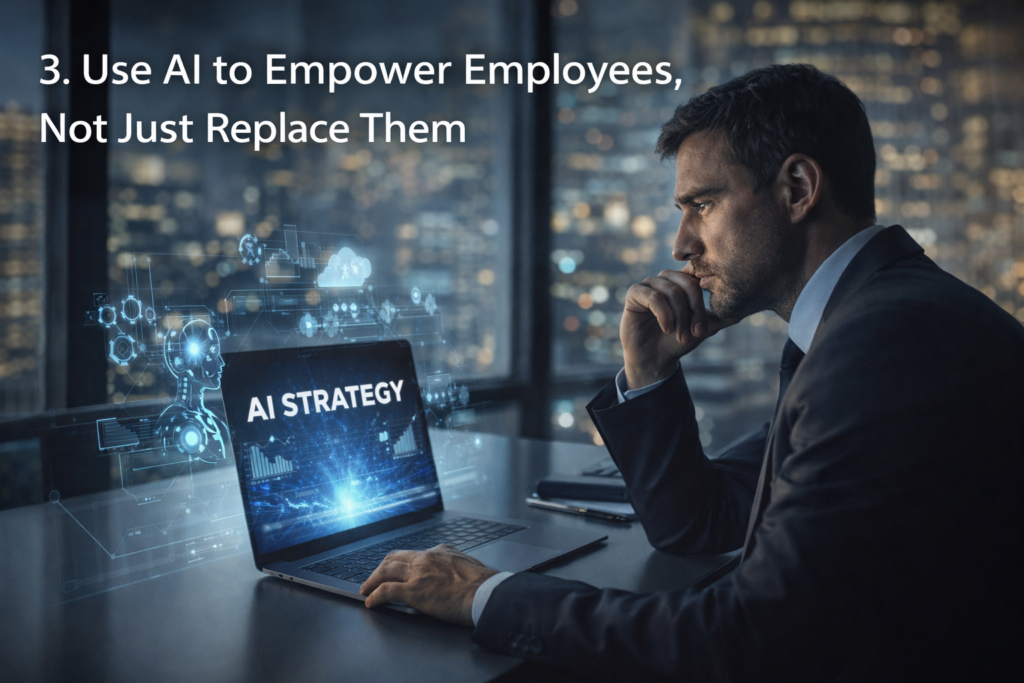
Do not just use AI to make the business cheaper.
Use it to make the business better.
A customer does not wake up in the morning hoping your back office became more efficient. They care about whether you answered quickly, whether you understood the issue, and whether getting help felt painless or exhausting. That is why the transcript’s Amazon example matters so much. The callback feature is not flashy. It simply removes friction and respects the customer’s time. Yet that small improvement likely does more for trust and loyalty than another round of cost cutting ever could.
That is the shift in thinking.
Do not ask only, “What labor can AI remove?”
Also ask, “What frustration can AI remove?”
Those are two very different questions. One is internal. The other is customer-facing. One helps the spreadsheet. The other helps the relationship. And in a competitive market, the relationship is where the real money is made. A missed call answered instantly by text feels different. A customer who does not need to repeat their story feels different. A delay explained clearly and proactively feels different. In the transcript, that point comes through again and again: often the smallest reduction in friction creates the biggest change in how a company is perceived.
Friction is expensive.
So is confusion.
So is silence.
This is especially important for small and midsize businesses, because AI gives them a chance they did not have before. It lets them act bigger than they are without becoming cold or corporate. A smaller company can now respond after hours, follow up instantly, keep context between conversations, and route inquiries with far more intelligence than before. None of that is just “automation.” It is service. It is responsiveness. It is competence at scale.
And when something goes wrong, the opportunity gets even bigger. The transcript makes a brilliant point here: a problem that is handled well can actually leave a customer more loyal than if no problem happened in the first place. That matters. Because business is not won by perfection alone. Very often, it is won by how well you recover, how clearly you communicate, and how human the experience still feels when something breaks.
That is the real play.
Use AI to strip out waste, yes.
But then reinvest those gains into speed, clarity, convenience, and care.
That is how you stop using AI like a cost-cutting tool and start using it like a growth tool. And the businesses that understand that difference will not just run leaner. They will become the companies customers genuinely prefer to deal with.
Keep Humans Where Humans Matter Most
This is where many owners get nervous. Once they see what AI can do, the next question becomes obvious: If the machine can handle so much, what is left for people? The answer is simple. Quite a lot. In fact, some of the most valuable parts of business become even more important once AI takes the routine work off the table.
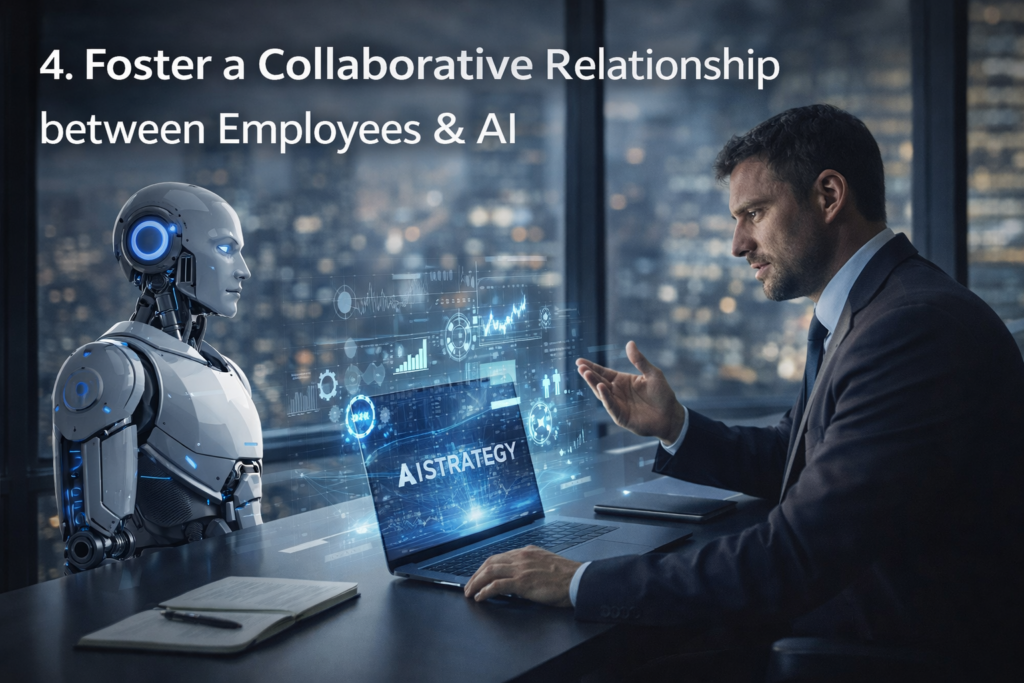
AI is excellent at repetition. It can answer the common question, send the follow-up, summarize the call, log the notes, route the request, and stay available after hours without getting tired or distracted. That is a huge advantage. But business is not made up only of repetitive tasks. There are moments that require judgment, nuance, empathy, persuasion, and trust. Those moments still belong, very often, to people.
AI should handle the routine.
Humans should handle the meaningful.
That is the balance.
In the transcript, one of the strongest ideas is that the best customer-facing people are not just bodies filling seats. They can calm an angry customer, make someone feel heard, recover a bad situation, and turn a frustrating interaction into loyalty. That kind of person is not waste. That kind of person is value.
And this is where many companies will make a serious mistake. They will use AI to remove too many human touchpoints, then act surprised when the business starts to feel colder, flatter, and harder to trust. Customers do not always need a human. But when they do, they really do. They need one when the issue is emotional. When the sale is large. When the situation is unusual. When something has gone wrong. When reassurance matters more than speed.
Those are not minor moments.
Those are often the moments that define the relationship.
So the smartest use of AI is not humans versus machines. It is a better division of labor. Let AI take the repetitive load off your team. Let it clear the clutter. Let it handle the low-level work that burns time and energy. Then let your people spend more of their day where they can actually make a difference: solving harder problems, building trust, closing important deals, and delivering the kind of service customers remember.
Do not use AI to remove all humanity from the business.
Use it to remove the drudgery.
That is a much better trade.
Because the future is not just fewer employees doing more. The better future is employees doing better work. Work that is more human. More valuable. More strategic. More memorable. And for the companies that get that right, AI will not just reduce labor. It will make the people who remain far more effective.
Start Small, Move Fast, and Reinvest the Gains
This is the part many business owners overcomplicate. They hear all the talk about AI and assume they need some massive transformation plan. They imagine expensive consultants, endless meetings, and a total rebuild of how the company operates. Most of the time, that is the wrong approach. The smartest way to use AI is usually much simpler. Start with the friction your customers feel most, and the repetitive work your team hates most, then improve those first.
You do not need to automate everything.
You need to automate the right things.
That means looking for the tasks that waste time without adding much value. Missed-call follow-up. Basic support questions. Appointment reminders. Internal summaries. Lead qualification. Status updates. Simple routing. The routine, repetitive work that drains your team and slows down the customer experience. Those are often the best early wins, because they create savings and improvement at the same time.
Then comes the part too many businesses skip.
Do not just pocket the savings.
Reinvest them.
Use that recovered time and money to make the business feel better on the customer side. Respond faster. Follow up more consistently. Add a callback option. Give customers clearer updates. Make handoffs smoother. Make service easier to access. In the transcript, that idea shows up again and again: the real danger is treating efficiency as the goal, instead of using it to unlock a better experience and more opportunity.
That is the play.
Cut the waste.
Keep the value.
Upgrade the experience.
It is also important to measure the right things. If the only thing you track is labor reduction, you will keep pushing AI in the wrong direction. You should also be watching response times, customer satisfaction, conversion rates, repeat business, and whether customers are finding it easier to buy from you and get help from you. A business can become more efficient and still get worse. That is exactly what you want to avoid.
And there is one more important point here. Do not wait for perfection. In the transcript, there is a strong warning about businesses that delay action because they want perfect proof before trying something new. Meanwhile, the smarter move is often to test, learn, adjust, and improve. Small businesses have an advantage here. They can move faster. They can experiment faster. They can improve faster. That matters.
You do not need a perfect AI strategy on day one.
You need a useful one.
The companies that win with AI will not be the ones that talk about it the most. They will be the ones that quietly remove friction, strengthen service, and make life easier for the customer. That is where the real compounding happens. Not in the headline about cutting staff, but in becoming the company people actually prefer to deal with.
That is the better way to use AI.
AI Agents & Bots That Do More Than Cut Costs
Too many companies approach AI with the wrong goal. They use it only to reduce labor, trim overhead, and squeeze a little more efficiency out of the business. That can help, but it is a small way to think. The real opportunity is much bigger: using AI to reduce friction, strengthen your operations, and create a far better customer experience.

That is where most AI tools fall short. They do not integrate deeply enough into the way your business actually works. They sit off to the side, produce generic output, and force your team to adapt to them instead of the other way around. The result is more complexity, more vendor lock-in, and very little real payoff.
And instead of giving you a generic demo, we will show you something built around your real world.
Get a free, no-obligation custom AI walkthrough video
We’ll create a short video built around your workflows, your tools, and your goals—so you can see exactly where AI can drive revenue, cost reduction, and speed inside your operations.
✅ No sales pressure
✅ No generic “AI overview”
✅ No buzzwords—just real use cases mapped to your systems
In your custom video, you’ll see:
- Where AI plugs into your stack (CRM, support, email, docs, ops tools)
- Which workflows it can automate end-to-end (not just “assist”)
- How we measure ROI (cycle time, cost-to-serve, conversion, resolution speed)
- How we avoid vendor lock-in and static platforms with an “innovation velocity” approach
This is the fastest way to find out if AI can move your P&L—before you spend months in pilot purgatory.
We can only produce 7 custom videos per week, and spots fill quickly.
👉 Claim your free custom AI walkthrough video
Let Intellic Labs show you how to make AI integrate, iterate, and finally pay off.