The First Technology Panic
Long before anyone worried that artificial intelligence would make us lazy, fake, or less human, one of history’s greatest philosophers worried about something far more ordinary.
Writing.
In Plato’s Phaedrus, Socrates tells a story about the invention of writing. The concern was not mild. Writing, he warned, would damage memory. It would let people carry knowledge outside their own minds. Instead of becoming truly wise, people would only appear wise because they could repeat words they had not fully understood.
That should sound familiar.
Today, people say AI will make us stop thinking. They say it will replace skill with shortcuts. They say it will create the appearance of intelligence without the substance of intelligence.
But this is not a new fear.
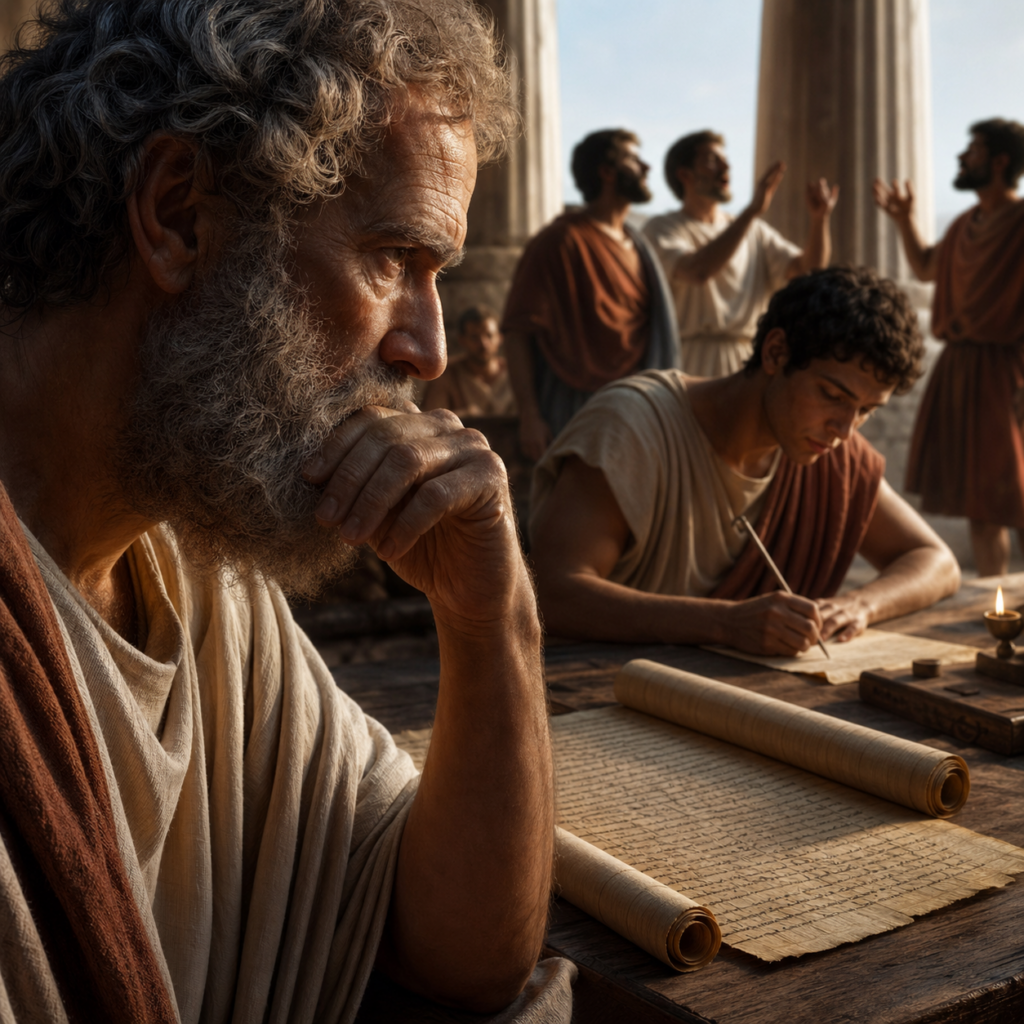
It is one of the oldest fears in human history.
The irony is almost perfect. Writing is now one of the highest expressions of human thought. We use it to preserve law, religion, science, philosophy, history, poetry, music, memory, and love. We do not think of writing as a cheap substitute for the mind. We think of it as one of the mind’s greatest tools.
Yet when it first appeared, even writing could be framed as a threat.
That is the pattern.
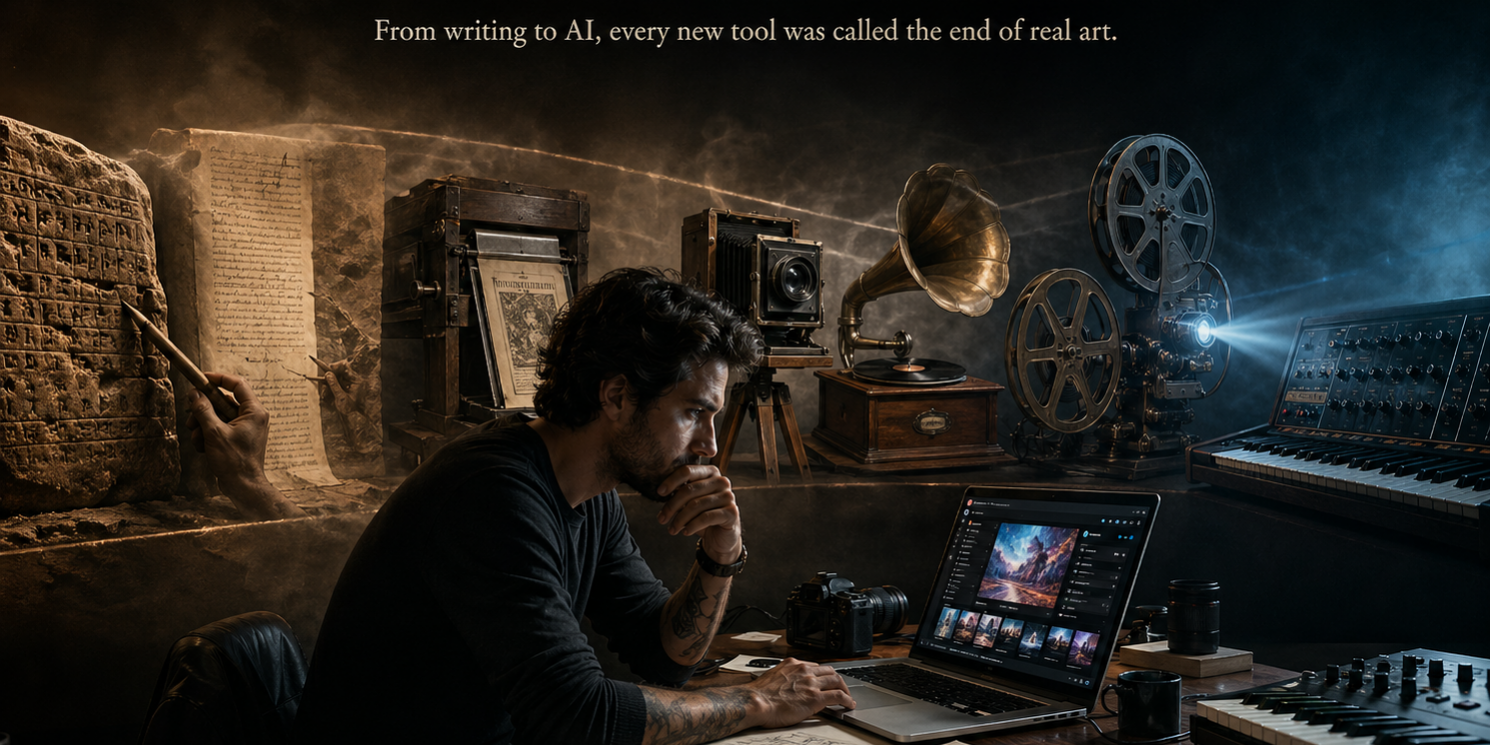
A powerful new tool arrives. It changes who can create, remember, teach, publish, or perform. Then the old guardians of the previous world call it dangerous. They say it will weaken people. They say it will cheapen the work. They say it will replace something sacred with something mechanical.
And sometimes, they are right about the initial disruption. But wrong about the ultimate conclusion.
We Have Heard This Speech Before
Once you see the pattern, you cannot unsee it.
Every time a new tool gives more people the power to create, the same argument returns in a new costume.
It happened with the printing press.
Before printing, books were rare, expensive, and controlled by a small educated class. Then suddenly, ideas could be copied and spread at a speed the old world could barely understand. To us, the printing press is one of the greatest inventions in human history. But to many people at the time, it was dangerous. It weakened control. It let the wrong people read the wrong ideas. It flooded society with material that had not passed through the old gatekeepers.
That fear should sound familiar.
Then came the novel.
Today, we treat novels as serious art. We study them in schools. We praise great novelists as some of the finest minds our species has ever produced. But early novels were often attacked as shallow, corrupting, emotional, and dangerous. Critics worried that readers, especially young people, would lose themselves in fantasy and become morally weaker.
Again, the fear was not just about the medium.
It was about control.
Then came photography.
Painters and critics looked at the camera and saw a machine pretending to be an artist. It did not have imagination. It did not have discipline. It did not have a soul. It merely copied the world by mechanical process.
To many artists, photography was not art.
Now, of course, that sounds absurd. Photography became one of the most powerful art forms in history. It gave us war photography, portraiture, fashion photography, photojournalism, cinema, family albums, and some of the most emotionally devastating images ever created.
Then came recorded music.
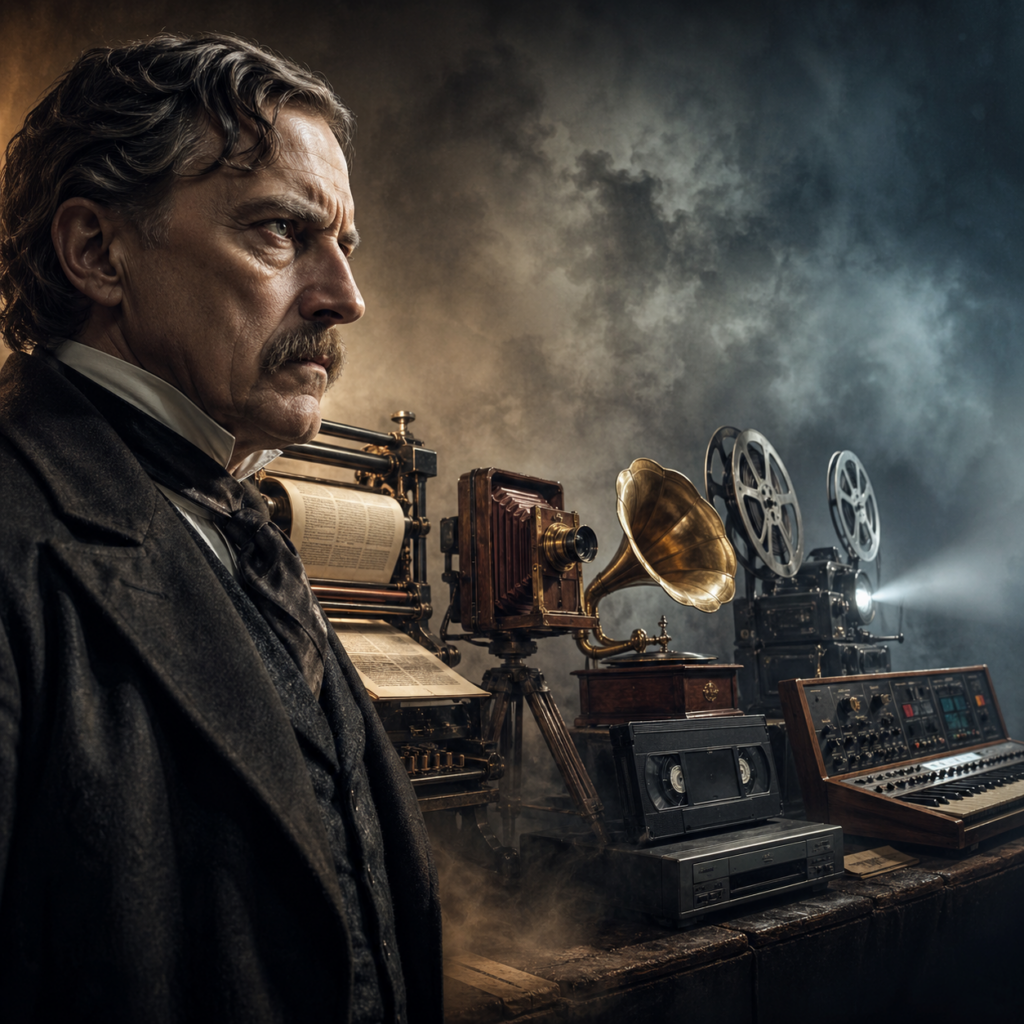
John Philip Sousa, one of America’s most famous composers and bandleaders, warned that phonographs and mechanical music would replace “human skill, intelligence, and soul.” He feared that music would be reduced to machinery. He feared that people would stop playing instruments. He feared the living act of music would be replaced by a dead mechanical copy.
He was not making some silly argument.
He was making almost the exact argument people now make about AI.
The machine has no soul.
The machine is a substitute for skill.
The machine will make people passive.
The machine will destroy the human act of creation.
But recorded music did not destroy music.
It preserved it.
Because of recording, we can still hear voices from generations ago. We can listen to artists who died before we were born. We can study jazz, blues, rock, gospel, classical music, country, hip-hop, and every other form of music through actual performances, not just written descriptions.
The phonograph did not bury the human soul.
It captured it.
Then came sound in movies.
When recorded sound entered theaters, live musicians were furious. And understandably so. Many of them had made a living performing music alongside silent films. Suddenly, “canned music” threatened their jobs. The machine could do what they had been hired to do.
Again, the economic fear was real.
But the artistic prediction was wrong.
Sound did not kill cinema. It gave us dialogue, musicals, sound design, unforgettable film scores, voice acting, and entire genres that could not have existed in the same way before.
Then came the VCR.
Hollywood treated it like an existential threat. Jack Valenti, the head of the Motion Picture Association of America, famously compared the VCR to the “Boston Strangler” of the movie industry. The fear was simple: if people could record movies at home, Hollywood would be destroyed.
Instead, home video became one of Hollywood’s greatest sources of revenue.
The machine they feared as a murderer became a cash register.
Then came synthesizers, drum machines, and sampling.
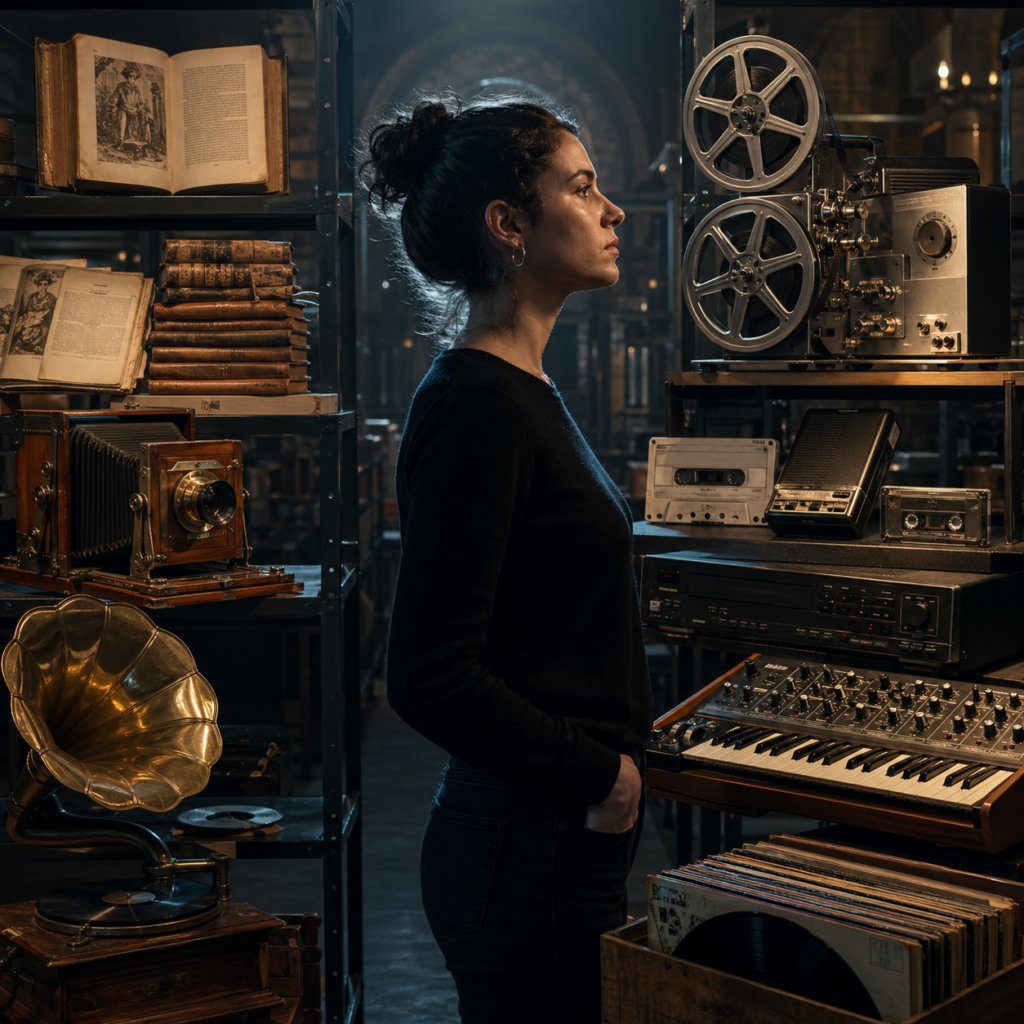
Traditional musicians said synthesizers were fake instruments. Drum machines were accused of replacing real drummers. Sampling was dismissed as theft, copying, or lazy imitation.
Now those tools are the sound of modern music.
Electronic music, hip-hop, pop, film scoring, dance music, and countless other genres were built with tools that earlier generations dismissed as artificial, cheap, or illegitimate.
That is the lesson.
A fake instrument often becomes a real instrument once enough artists learn how to use it.
So when people say AI art is not real art, we should at least recognize the speech.
We have heard it before.
We heard it when writing threatened memory.
We heard it when printing threatened knowledge.
We heard it when novels threatened morals.
We heard it when photography threatened painting.
We heard it when records threatened musicians.
We heard it when sound threatened cinema.
We heard it when the VCR threatened Hollywood.
We heard it when synthesizers threatened real music.
The words change.
The fear does not.
“This is fake.”
“This is soulless.”
“This is cheating.”
“This will destroy real art.”
“This time is different.”
Maybe AI is different in some ways. In fact, it almost certainly is.
But the argument against it is not different.
It is one of the oldest arguments in human history.
The Critics Were Not Always Crazy
To be fair, the critics were not always wrong about the pain.
New technology does disrupt people.
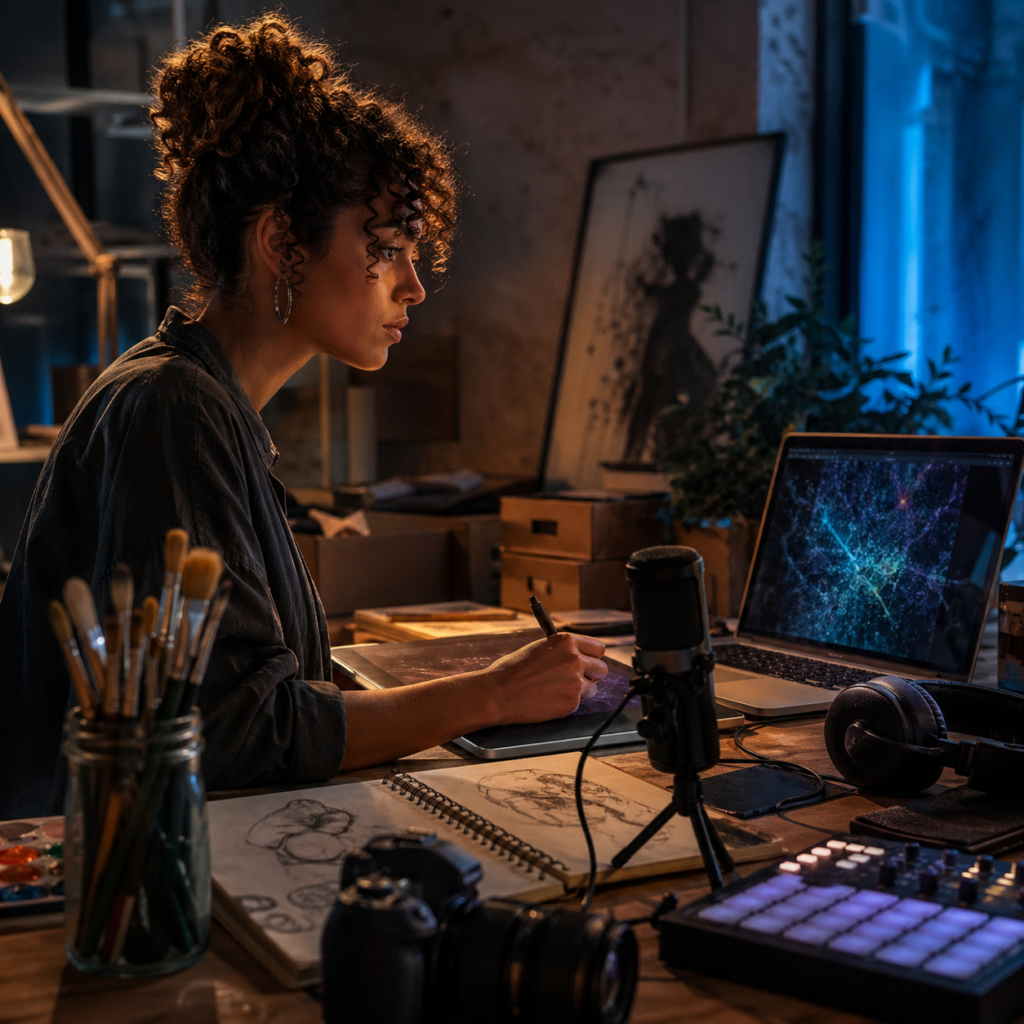
Photography changed the role of painters. Recorded music threatened live musicians. So did streaming music. Sound films hurt theater orchestras. Drum machines replaced some drummers. Digital tools changed design, publishing, editing, photography, and music production.
AI will do the same.
Almost every industry is going to feel it. Some already are.
So no, the fear is not imaginary.
But the mistake is confusing disruption with destruction.
Photography did not end visual art.
Recorded music did not end music.
The VCR did not end movies.
Synthesizers did not end musicianship.
They changed the work.
They did not erase the human being.
That is the distinction we need to make with AI.
Artists are right to care about copyright, consent, compensation, and giant companies using their work without permission. Those are serious issues.
But that is different from saying AI-assisted work is fake, soulless, or not creative.
One argument is about fairness.
The other is about fear.
And fear has a terrible track record.
The Machine Usually Expands the Art
The strange thing about these feared tools is that they usually do not shrink art.
They expand it.
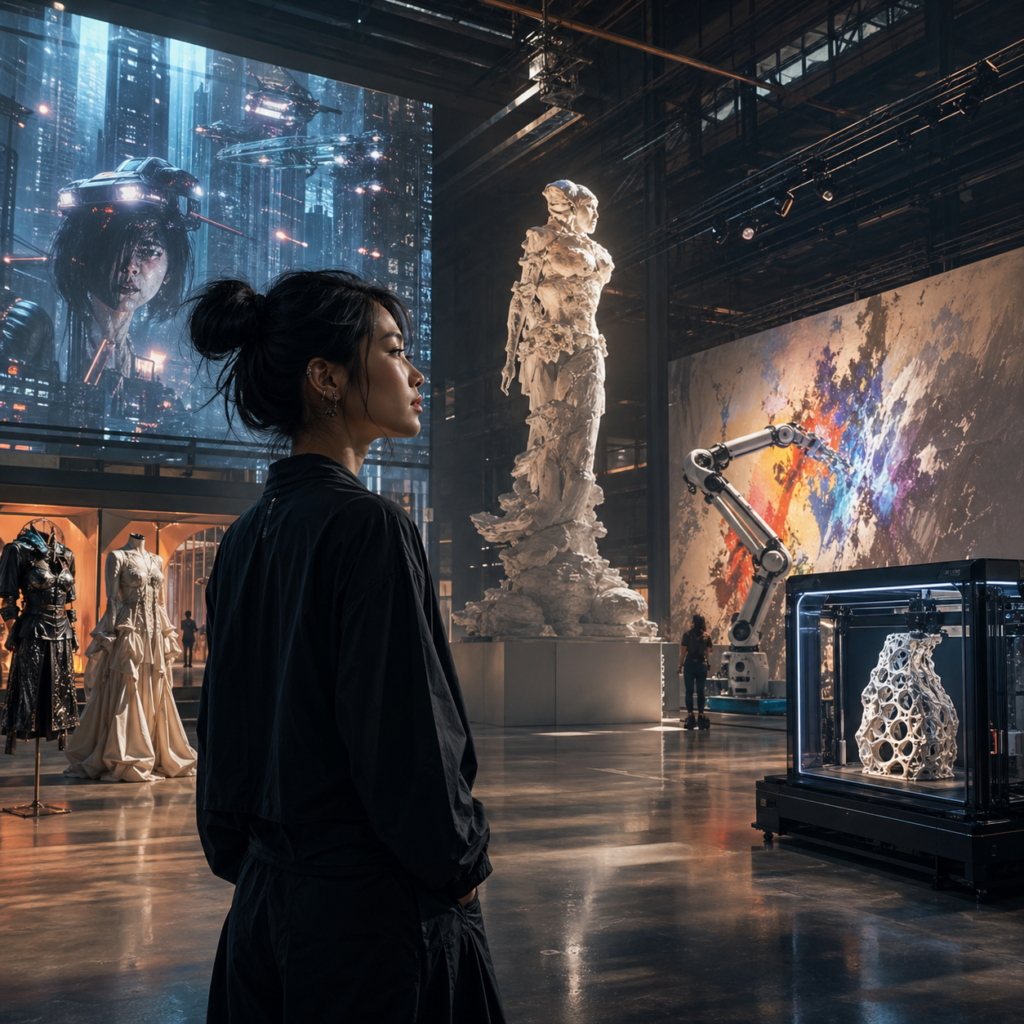
Photography did not kill painting. It pushed painting beyond simple realism. If a camera could capture what the world looked like, painters were free to explore what the world felt like.
Recorded music did not kill performance. It let a song travel across the world. It let a voice outlive the body that made it. It turned local musicians into global icons.
Sound did not kill cinema. It gave film dialogue, music, atmosphere, tension, silence, and voice. It made movies more human, not less.
Synthesizers did not kill music. They gave artists sounds no orchestra could make. Sampling did not destroy creativity. In the hands of great producers, it became its own language.
That is what new tools do at their best.
They do not replace imagination.
They multiply it.
AI will be no different for people who know how to use it well. A writer can test ten openings instead of one. A musician can explore arrangements that once required a full studio. A designer can move from idea to concept in minutes. A small business can build tools that used to require a giant team and a giant budget.
Will AI create more bad work?
Of course.
A tool does not make someone great. It only gives them more leverage. In the hands of a lazy person, AI will produce lazy work. In the hands of a talented person, it can help produce more, faster, and at a higher level.
That is not the death of creativity.
That is creativity with a larger engine.
But AI is Different? Or is it?
The strongest argument against all of this is simple.
AI is different.
And in some ways, it is.
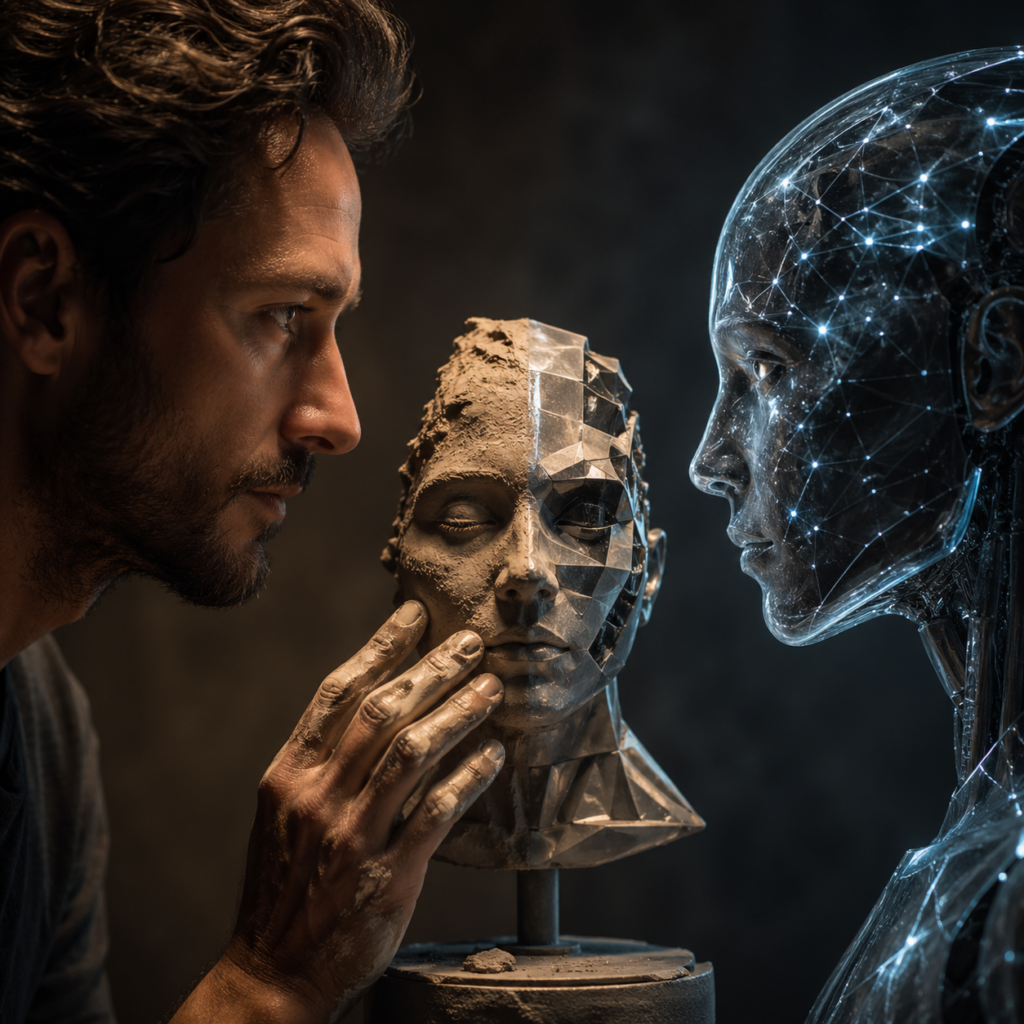
AI is not just a camera, a printing press, a synthesizer, or a VCR. It can write, draw, code, compose, edit, imitate, summarize, design, and speak. It does not just help us distribute creative work. It helps us produce it.
That deserves serious thought.
But the “AI has no soul” argument still runs into a problem.
Either humans have something special that machines cannot replicate, or they do not.
If humans do have something special, then AI will not erase us. It will become another tool humans use to express that special thing. In a brand new way.
If humans do not have anything special, then the argument collapses anyway. Because then the sacred line people are trying to defend was never real.
You cannot argue that human creativity is priceless and irreplaceable, then also argue that a machine can erase it overnight.
AI may be dangerous. It may be abused. It may flood the world with cheap, shallow content. It may change industries faster than people are ready for.
But that is not the same as saying it destroys the human role.
The real question is not whether AI has a soul.
The real question is whether the person using it has taste, judgment, vision, and something worth saying.
The Real Choice
AI will not destroy the things we love.
Bad artists with AI will still make bad art. Lazy writers with AI will still produce lazy writing. Generic companies with AI will still sound generic.
The tool does not create the soul.
The person does.
But talented people with AI will move faster. That is what people are really afraid of.
Imagine a brilliant musician who once made four albums over an entire lifetime. With AI, maybe that same artist can create two albums a year.
Imagine your favorite sitcom writer. Instead of waiting two or three years for one new season, maybe they can produce three or four seasons a year with a smaller team.
Imagine a filmmaker who once needed $5 million, a giant crew, and two years to bring an idea to life. With AI, maybe a small team can create something powerful for $250,000 in six months.
Imagine a software company that used to build one major product a year. With AI, maybe that same team can build ten.
Imagine a small business owner who could never afford a full marketing department, sales team, customer support team, designer, copywriter, and data analyst. With AI, maybe they can finally compete with companies ten times their size.
That is the real shift.
AI does not make everyone great. It gives everyone leverage.
And leverage rewards the people who know what they are doing.
A great musician with AI becomes more productive.
A great writer with AI becomes more dangerous.
A great engineer with AI builds faster.
A great entrepreneur with AI competes harder.
That is why the real resistance to AI is fear.
Fear of change.
Fear of losing status.
Fear of learning something new.
Fear that the old gatekeepers may not matter as much as they used to.
That fear is understandable.
But it is not a strategy.
AI may be dangerous. We should take that seriously. We should build carefully, create rules wisely, and stay honest about the risks.
But if we manage not to destroy ourselves, AI will not end human creativity.
It will reveal it.
The people with taste, judgment, vision, and courage will use it to build things the rest of us could not have imagined.
So the choice is simple.
You can hate the tool. You can mock it. You can pretend this time is completely different from every other technological panic in history.
But the world will keep moving.
AI will not replace you.
But a human who uses AI will.
Do not be left behind.
Ready to See What AI Looks Like for Your Business?
At Intellic Labs, we don’t believe in generic demos or one-size-fits-all AI solutions. The same way this article asked you to meet your employees where they are, we meet your business where it is — inside your actual workflows, your real tools, and the specific friction points that are costing you time and revenue right now.
That’s why we created something a little different.
We’ll build you a free, custom AI walkthrough video — made specifically for your business.
Not a slide deck. Not a product overview. A short video built around your systems, your team, and your goals — so you can see exactly where AI can reduce friction, drive revenue, and create a better experience for both your customers and your people.
In your custom video, you’ll see:
✅ Where AI plugs into your existing stack — CRM, support, email, docs, and operations tools
✅ Which workflows can be fully automated end-to-end, not just “assisted”
✅ How we measure real ROI — cycle time, cost-to-serve, conversion, and resolution speed
✅ How we avoid the vendor lock-in and static platforms that leave most businesses stuck
No sales pressure. No buzzwords. No generic AI overview that could apply to any company on the planet. Just an honest look at what’s actually possible inside your operation — before you spend a dollar or a month in pilot purgatory.
We produce seven of these each week. Spots move quickly.
👉 Claim your free custom AI walkthrough video
Your team has more potential than any tool can unlock on its own. Let Intellic Labs help you show them what’s possible.