The Old Ad Game Is Ending
For years, paid advertising felt like one of the great equalizers for small businesses.
You did not need a massive sales team.
You did not need a national brand.
You did not need a giant marketing department.
If you had a good offer, a decent ad, and a clear audience, platforms like Meta, Google, and YouTube gave you a real shot. You could put a small budget behind an ad, test a few ideas, and see what happened.
It was never easy.
But it was possible.
That version of paid advertising is fading fast.
Today, the ad market is more crowded, more expensive, and more unforgiving. Every business is fighting for attention. Every click costs money. Every weak ad burns budget. Every bad landing page wastes opportunity.

And small businesses feel this pressure the most.
Many owners already know how hard this has become. You run a few ads, and the results are inconsistent. You hire an agency, and the monthly cost is painful. You test new creative, and it stops working faster than expected. You try to make sense of the data, but the platforms keep changing.
Then, just as the market gets harder, AI enters the picture.
This is where the real shift begins.
AI is not just another marketing tool. It changes the speed of the entire advertising process. It can help create more ad ideas, write more variations, analyze more results, and suggest more improvements than a human team could manage manually.
That does not mean humans are no longer needed.
In fact, human judgment matters more than ever.
But the old model of advertising — where a business runs a handful of ads, waits for results, and slowly adjusts by hand — is running out of time.
The next era of advertising will not be human-only.
It will be human-led, AI-powered, and much faster than what came before.
Human-Only Advertising Is Too Slow
The old advertising process was built around human limits.
A business owner, freelancer, or agency would come up with a few ad ideas, write several headlines, create some images or videos, launch the campaign, and wait for the results. After enough data came in, someone would review the numbers, decide what worked, make a few changes, and start the process again.

That approach made sense when everyone was moving at roughly the same speed.
But that is not the market we are entering now.
AI changes the pace completely. It can generate dozens of campaign angles in minutes. It can write headline variations, rewrite ad copy for different audiences, create new image concepts, draft video scripts, suggest landing page improvements, and summarize campaign data almost instantly.
That does not make human marketers useless. It makes slow workflows dangerous.
Because paid advertising is no longer just about having one clever idea. It is about testing enough ideas to find the few that actually work. One headline may fall flat. Another may cut through. One offer may get ignored. Another may turn a casual visitor into a booked call or paying customer.
The business that tests five versions is learning.
The business that tests fifty is learning faster.
That difference compounds over time. Every campaign teaches the AI-assisted business something new about its audience, its offer, its creative, and its funnel. Meanwhile, the human-only business may still be waiting for the first round of results to come back from the agency.
This is the real danger for small businesses.
It is not that AI will automatically create perfect ads. It will not. The danger is that competitors using AI will move through the testing cycle faster, find winners sooner, and waste less time on ideas that are not working.
In a crowded ad market, speed matters.
Human creativity still matters. Strategy still matters. Taste still matters. But human-only advertising is becoming too slow for the pace of modern competition.
AI Turns Ads Into a Testing Machine
The real power of AI is not that it can write one decent ad.
That is useful, but it is not the revolution.
The real power is that AI can help a business create, test, measure, and improve ads at a pace that was almost impossible before. Instead of spending days trying to come up with a handful of ideas, a business can use AI to generate dozens of ad angles in minutes.
It can test different headlines.

Different offers.
Different hooks.
Different calls to action.
Different versions for different customers.
One ad might speak to price. Another might speak to convenience. Another might focus on trust, speed, safety, status, fear, frustration, or the desire to finally solve a problem that has been bothering the customer for years.
That matters because advertising is not usually won by the first idea.
Most ads fail. Most headlines are forgettable. Most creative does not produce a meaningful return. That has always been true. The difference now is that AI can help businesses move through those failures faster and find the winning patterns sooner.
This is where advertising becomes a testing machine.
AI can help create the ad copy, suggest image concepts, write video scripts, improve landing page text, review campaign data, summarize what worked, and recommend what to test next. Instead of treating each ad as a standalone piece of creative, the business starts treating every campaign as part of a learning system.
That is a major shift.
A small business might use AI to test ten different versions of the same core offer. Then it might test those versions across different audiences. Then it might use the results to improve the landing page. Then it might use the next round of data to sharpen the offer again.
Each cycle teaches the business something.
Over time, those lessons become an advantage. The business learns which pain points matter most. It learns which promises get attention. It learns which objections stop people from buying. It learns which calls to action produce leads, calls, appointments, or sales.
That kind of learning used to require a large team, a serious budget, and a lot of time.
Now, AI puts much of that capability within reach of small and medium-sized businesses.
But only if they use it correctly.
The goal is not to flood the internet with cheap, generic ads. That will only create more noise. The goal is to use AI to test smarter, learn faster, and improve more consistently than competitors who are still doing everything by hand.
The future of advertising will not belong to the business that guesses best.
It will belong to the business that learns fastest.
Small Businesses Face the Biggest Risk — and the Biggest Opportunity
Small businesses are in a difficult position.

They already compete against companies with larger budgets, bigger teams, better data, and more experience running paid ads. A large company can afford an agency, a designer, a copywriter, a media buyer, a data analyst, and a full marketing department.
Most small businesses cannot.
That means many owners are forced to make paid ads work with limited time, limited money, and limited support. They are trying to run the business, serve customers, manage employees, handle operations, and somehow keep the marketing machine moving at the same time.
AI makes that gap more dangerous.
A competitor using AI can create more ads, test more angles, analyze more results, and improve campaigns faster. They may not have a bigger budget. They may simply be using the same budget with more intelligence and speed.
That is the risk.
But it is also the opportunity.
A local contractor, law firm, medical office, restaurant, agency, or service business may not be able to hire a full marketing department. But with the right AI-powered system, they can begin to operate with the discipline and testing speed of a much larger company.
That does not guarantee they will win.
However, it does give them a fighting chance.
The small businesses that ignore AI may find themselves competing against companies that are learning faster every week. The small businesses that adopt it early may discover something rare in a crowded market: an opening.
A chance to move before everyone else catches up.
AI Will Not Fix a Broken Business
AI is powerful, but it is not magic.
It can help you write better ads, test more ideas, study the results, and improve faster. However, it cannot turn a bad offer into a good one. It cannot make people want something they do not need. It cannot repair a confusing website, poor service, weak pricing, or a landing page that fails to convert.
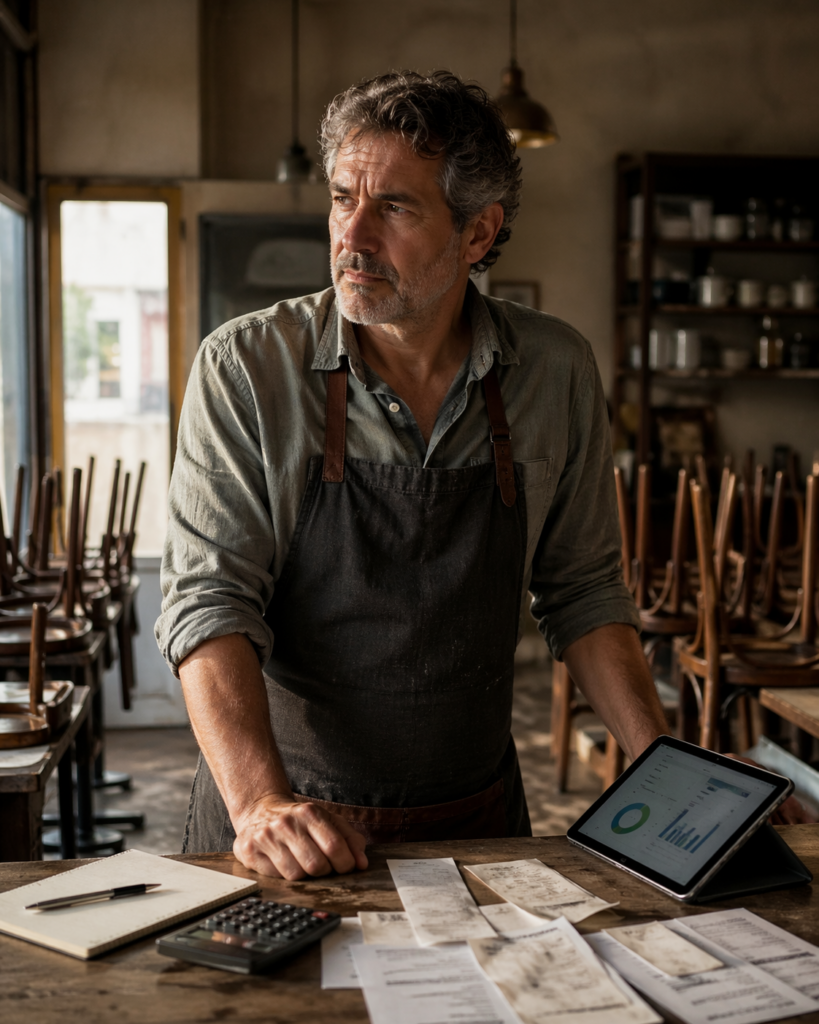
In fact, AI may expose those problems faster.
If your offer is strong, AI can help you sharpen it. If your message is close, AI can help you test better versions. If your landing page is almost working, AI can help you find the weak spots and improve them.
But if the foundation is broken, faster testing will only reveal the cracks.
This is why human judgment still matters so much. A business owner understands the customer in ways software cannot fully replace. They know the real objections. They hear the complaints. They understand what people are afraid of, what they want, and what finally makes them say yes.
AI can support that judgment.
It should not replace it.
The businesses that win with AI will not be the ones that blindly generate endless ads and hope something works. They will be the ones that combine AI speed with human understanding. They will use AI to create more options, but they will still use judgment to decide what should be tested, what should be rejected, and what message truly fits the business.
There is also a risk here.
AI can create generic ads. It can make claims that are too aggressive. It can produce copy that sounds polished but says very little. It can also push a business toward volume instead of quality if no one is paying attention.
That is not smart marketing.
That is automated noise.
The goal is not to remove people from advertising. The goal is to remove the slow, repetitive work that keeps people from making better decisions.
AI should help the business move faster.
Humans still need to make sure it is moving in the right direction.
The Businesses That Learn Faster Will Win
The biggest advantage in advertising is not one perfect ad.
It is a system that keeps learning.

That is where AI becomes so powerful. It can help a business connect the dots between ads, landing pages, forms, phone calls, booked appointments, sales, and customer behavior. Instead of only asking, “Which ad got the most clicks?” the business can start asking a better question: “Which ad actually created customers?”
That is the difference between running ads and building a marketing machine.
Clicks matter, but they are not the final goal. Leads matter, but only if they turn into real opportunities. A campaign that looks good inside Meta or Google may still fail if the leads are weak, the landing page is confusing, or the follow-up is slow.
AI can help find those gaps faster.
It can review performance, compare campaigns, summarize patterns, and suggest what to test next. It can help the business see which messages are attracting serious buyers, which offers are producing low-quality leads, and which parts of the funnel need attention.
Over time, that creates a feedback loop.
The ads teach the landing page.
The landing page teaches the follow-up.
The follow-up teaches the sales process.
The sales process teaches the next campaign.
That is where the real advantage comes from. The business is no longer guessing from campaign to campaign. It is learning from every result and using that knowledge to improve the next move.
This is why small businesses should not wait.
The companies that start now will build better data, better habits, better workflows, and better instincts. They will learn what AI can do, where it fails, and how to use it without losing control of their message.
Human judgment still matters.
It always will.
But human-only advertising is ending. The market is becoming too fast, too competitive, and too data-driven for businesses to rely only on manual effort.
The winners will not be the companies that replace people with machines.
They will be the companies that use AI to help their people learn faster, test smarter, and act sooner.
Ready to See What AI Looks Like for Your Business?
At Intellic Labs, we don’t believe in generic demos or one-size-fits-all AI solutions. The same way this article asked you to meet your employees where they are, we meet your business where it is — inside your actual workflows, your real tools, and the specific friction points that are costing you time and revenue right now.
That’s why we created something a little different.
We’ll build you a free, custom AI walkthrough video — made specifically for your business.
Not a slide deck. Not a product overview. A short video built around your systems, your team, and your goals — so you can see exactly where AI can reduce friction, drive revenue, and create a better experience for both your customers and your people.
In your custom video, you’ll see:
✅ Where AI plugs into your existing stack — CRM, support, email, docs, and operations tools
✅ Which workflows can be fully automated end-to-end, not just “assisted”
✅ How we measure real ROI — cycle time, cost-to-serve, conversion, and resolution speed
✅ How we avoid the vendor lock-in and static platforms that leave most businesses stuck
No sales pressure. No buzzwords. No generic AI overview that could apply to any company on the planet. Just an honest look at what’s actually possible inside your operation — before you spend a dollar or a month in pilot purgatory.
We produce seven of these each week. Spots move quickly.
👉 Claim your free custom AI walkthrough video
Your team has more potential than any tool can unlock on its own. Let Intellic Labs help you show them what’s possible.