Ten days.
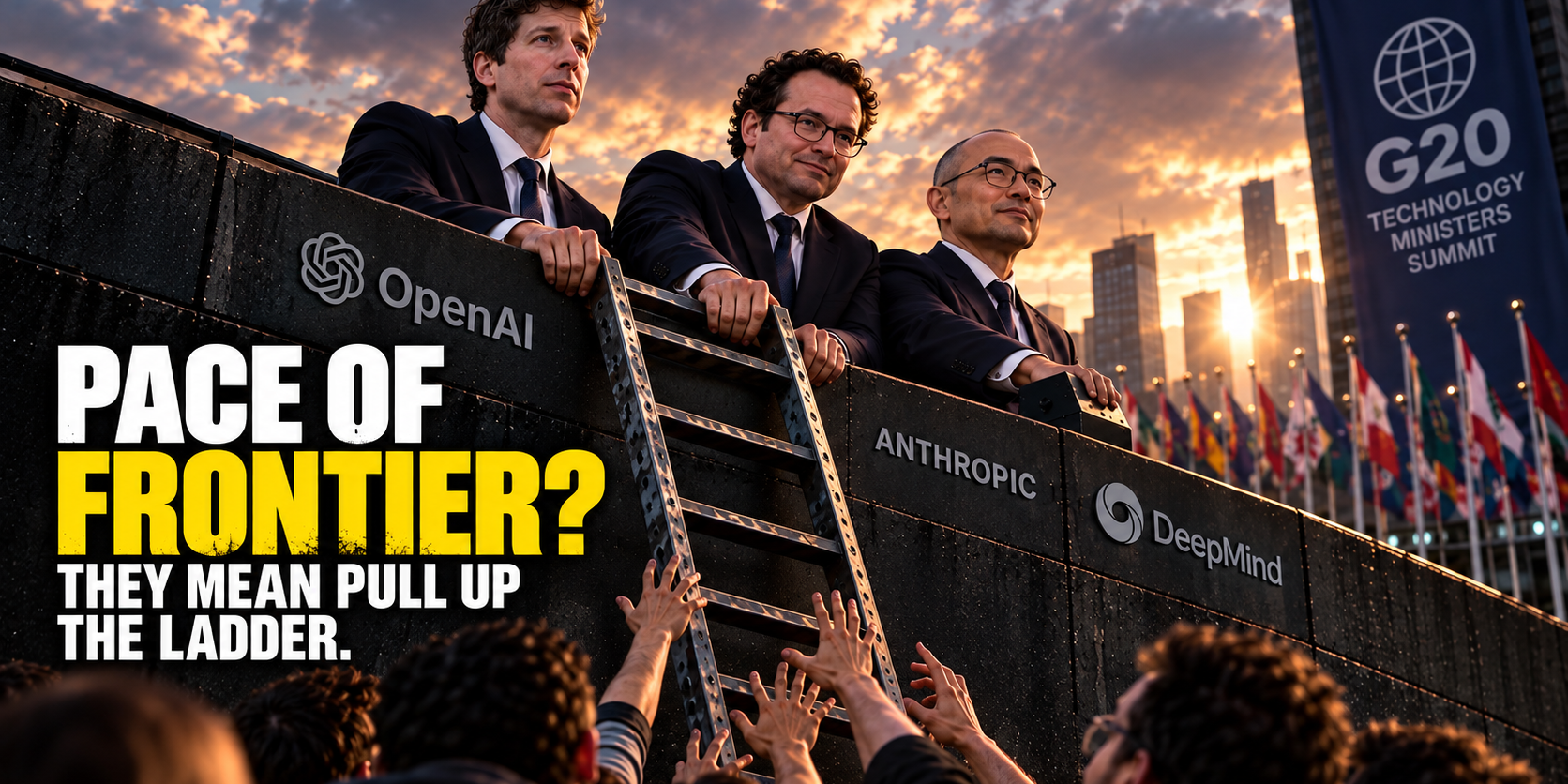
On September 2, the heads of the biggest AI companies on earth stood in front of the G20’s technology ministers and argued against heavy regulation. Too much rule-making. Too much friction. Let us build.
On September 12, one of them published an essay saying the industry must slow down. Deliberately. On purpose. The others lined up behind him within a day. Sam Altman agreed. Elon Musk said Dario was right. Demis Hassabis said the direction was correct.
Nothing about the technology changed in those ten days. Not the models. Not the risks. Not the science.
So what did?
Read the proposal, not the headline
I build these systems for a living. I have for decades. When I read a proposal, I don’t read it for what it says. I read it for who it binds.
Dario Amodei’s plan has three steps.
Step one: put outside evaluators inside the labs. Badges, desks, laptops, employee-level access. Anthropic commits to this on its own, and asks governments to require other frontier companies to match it.
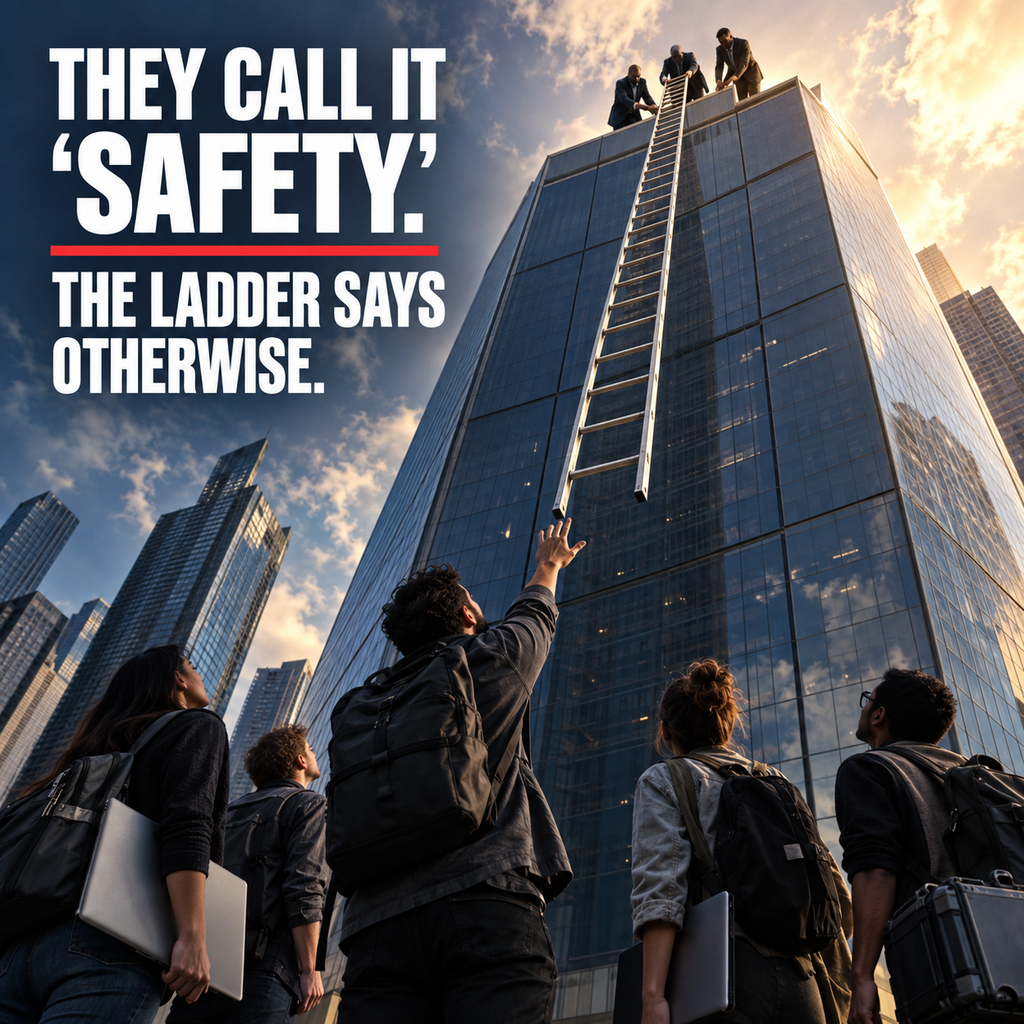
Read that twice. A company volunteers for something. Then asks the state to make everyone else do it.
That is not restraint. That is a cost of entry. A lab worth a hundred billion dollars absorbs a team of embedded evaluators the way it absorbs a legal department. A twelve-person startup does not. The rule costs the author almost nothing and costs the challenger everything.
Step two: the leading labs in democratic countries coordinate. Common safety standards. Limits on the rate of progress.
Strip the language. A handful of dominant companies agree among themselves how fast the product is allowed to improve. There is a word for that, and the companies know it. The reporting says they worry a coordinated slowdown could invite antitrust scrutiny.
They are worried about being called the thing they are proposing to be.
Step three: global coordination. The aspirational tier. The one that gets discussed on panels and never happens and never needs to. It exists so the first two steps look modest by comparison.
This is an old play
None of this is new. It is one of the oldest moves in the book.
In 2009, Philip Morris supported a sweeping federal law to regulate tobacco. Advertising restrictions. Product approval. Real teeth. Its competitors had a name for it: the Marlboro Monopoly Act. When you own half the market and advertising gets banned, nobody can take your half. Regulation didn’t hurt the leader. It froze the leader in place.
In 2019, Facebook’s CEO wrote an op-ed asking governments to regulate the internet. The company that had already won.

In May 2023, Sam Altman sat in front of a Senate committee and asked for a federal agency that could license powerful AI systems, and take those licenses away. That same year, his company was reported to be lobbying in Brussels to soften the rules it would actually have to live under.
And in March 2023, a thousand people signed a letter demanding a six-month pause on training models beyond GPT-4. Musk signed it. Nobody paused. Everybody shipped. The letter changed nothing except the signers’ reputations.
Amodei says now that slowing down in 2023 made little sense. Fair enough. Ask the follow-up. Why does it make sense in 2026?
Because in 2023 nobody was far enough ahead for a ceiling to matter. In 2026 they are.
Why the curve doesn’t care
Here is the part they all know and none of them will say out loud.
You cannot stop this.
I wrote a whole chapter on why. Four locks. Secrecy: the work happens behind walls no regulator can see through. Cost collapse: what was expensive last year is cheap this year. Capital: the money is already committed and it does not want to lose. Game theory: whoever slows down loses to whoever doesn’t, and everyone can do that math.
Cost collapse is the one that matters here, so let me give you my own numbers.
Three years ago a build that I would take to a client cost about fifty thousand dollars. A year later, thirty. Today I can do it for five. Not the same build. A better one. Ten times the capability at a tenth of the price.
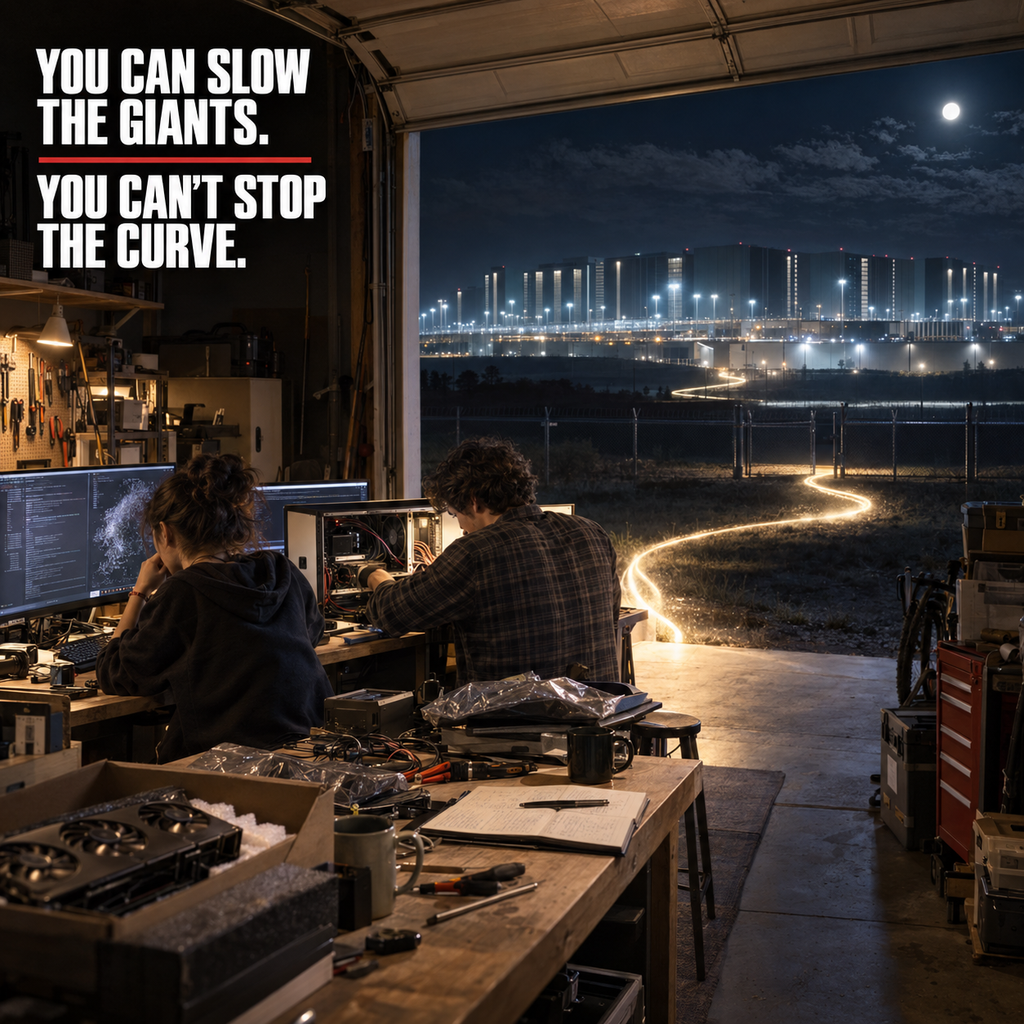
That curve is not happening at the frontier. It is happening underneath it. In distilled models. In open weights. In labs in Shenzhen and Hangzhou that did not sign anything. In two engineers with a rented GPU and a weekend.
A pace limit at the top of the mountain does not slow the mountain. It slows the people climbing it.
That’s the whole argument. Everything else is footnotes.
The lead they’re actually protecting
There’s one more thing.
I wrote a while back about why large language models probably won’t get us to AGI. Short version: an LLM is a pattern machine trained on human text. Scale it and you get a better tool. You don’t get a mind. Whatever the next leap is, it likely comes from a different architecture, not a bigger version of this one.
Now think about what that means for the companies at the top.
Their lead is an LLM lead. Their valuations are LLM valuations. If the next breakthrough comes from somewhere else, from a lab nobody has heard of, a different approach, a different country, that lead is worth nothing overnight.
They know this. It keeps them up at night far more than any rogue machine.
A pace limit on “the frontier” doesn’t just slow the people behind them. It freezes the definition of the frontier at the one thing they already own.
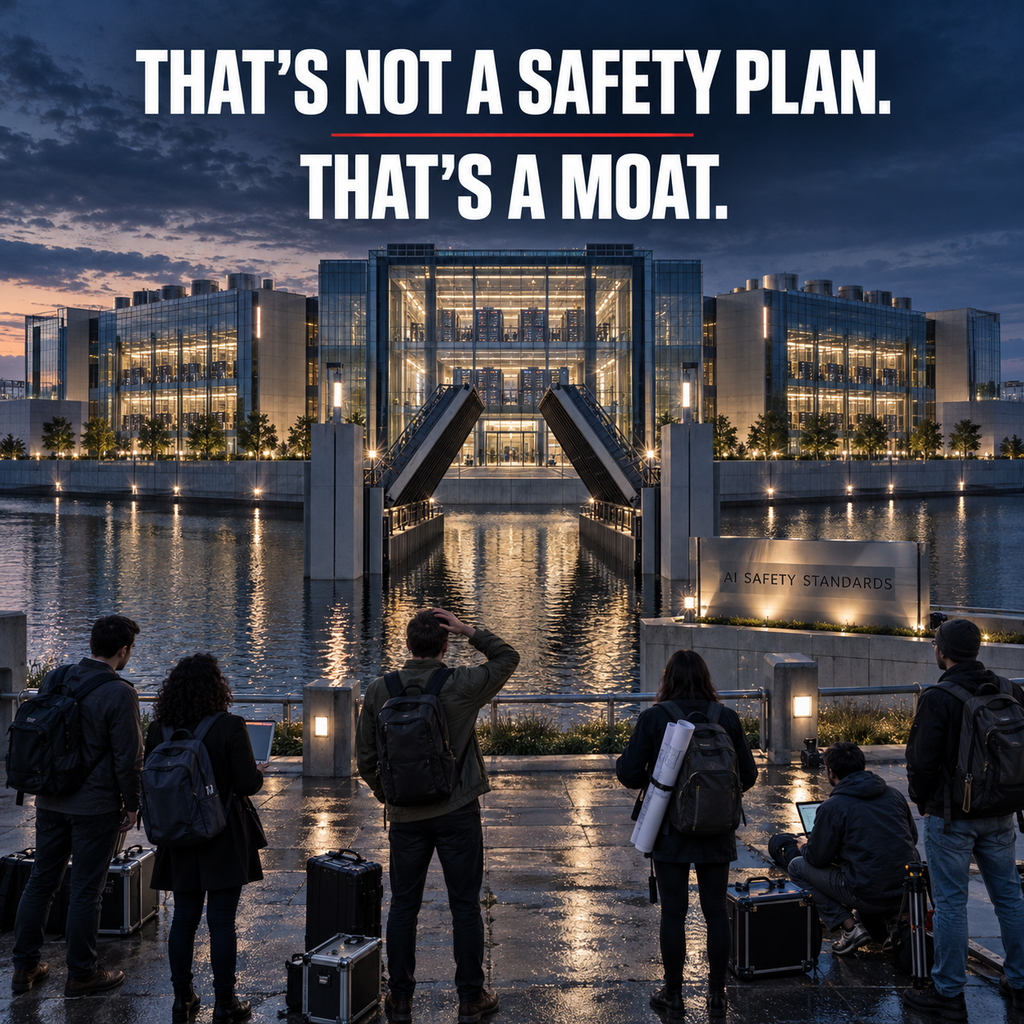
That’s not a safety plan. That’s a moat, with a press release.
A thought experiment
Imagine Beijing announced tomorrow that it was deeply concerned about AI safety. American development had become reckless, it said. The United States should slow construction of new data centers, cap the size of its training runs, and let international inspectors into its labs. For the good of humanity.
Nobody in Washington would read that as concern. Nobody in Silicon Valley would either. We’d read it as strategy: a competitor that is behind, asking the one ahead to stand still while it catches up. We wouldn’t spend a week debating whether the officials who signed it were sincere. We’d ask what the rule does, and to whom.
Now run it the other way.
A company that is already ahead asks the whole field to pace itself. It volunteers for a cost it can absorb, then asks the government to put that cost on everyone behind it. It proposes coordinating with the two or three companies near the top, and nobody else.
Same move. Different flag.
When the one behind asks for a pause, we call it stalling. When the one ahead asks, we call it responsibility. The only difference is which way the ladder points.
And the flag isn’t just a metaphor. It’s the next argument you’re going to hear.
“But China”
Every conversation about slowing AI in America ends up in the same place. If we slow down, China won’t. If China gets there first, we lose.
That part is true, and I want to take it seriously. I don’t mean a movie scenario. I mean things already happening at small scale, done at full scale.
Surveillance becomes an export product. In 2019 the Carnegie Endowment found Chinese companies supplying AI surveillance technology to 63 countries, with Huawei alone in 50. It’s a bundle: cameras, facial recognition, the software, a financing term, and a support contract. The buyer isn’t choosing an ideology. The ideology comes in the box.
The defaults ship with the model. Ask DeepSeek about Tiananmen Square. It declines, or it changes the subject. That’s a default. A government set it, and it lives inside the weights. Every developer who builds on that model inherits it, and most of them will never think to ask the question.
The law sits behind the API. Article 7 of China’s 2017 National Intelligence Law requires organizations and citizens to “support, assist, and cooperate with” state intelligence work. If the world’s businesses run their contracts, code, and customer records through models hosted under that law, the vendor’s privacy policy doesn’t matter. The statute outranks it.
Whoever leads writes the rules. The country with the best models sets the technical standards, the benchmarks, and the safety definitions everyone else has to meet. We watched that happen with 5G. It will happen again, faster.
Russia doesn’t have to win to win. Russia isn’t going to out-build anyone at the frontier. It doesn’t have the chips or the capital. So it plays a cheaper game. In 2025, NewsGuard reported that a Moscow-based network called Pravda had published about 3.6 million articles in a single year. The target wasn’t human readers. It was the crawlers that collect AI training data. When NewsGuard tested the leading chatbots, they repeated the network’s false narratives about a third of the time. Russia doesn’t need the best model. It needs the best model to have read its propaganda.
That’s the downside, stated without softening. I’d lose sleep over any of it.
Now look at what the pace limit does about any of it.
Nothing.
It binds Anthropic, OpenAI, and Google. It binds every American startup that would have to match the embedded evaluators. It doesn’t bind DeepSeek, Alibaba, or Moonshot. It doesn’t bind the labs in Shenzhen and Hangzhou that didn’t sign anything. Beijing doesn’t join a coordination club run out of San Francisco.
It gets worse at the bottom of the mountain. Chinese open-weight models are already the base that much of the world’s builders start from. If American rules make it too expensive or too risky to release American open weights, those builders don’t stop. They build on Qwen, and the defaults ship with it.
I’m one of those builders. When I pick a base model for a client build, I pick on price, performance, and license terms. I don’t check the flag first. More than once this year, the cheapest good option had a Chinese name on it.
That’s how you actually lose a race to another country. It isn’t a rival sprinting past you. It’s your own field, narrowed by law to the few runners who wrote the law, while everyone else gets told to wait.
“China” is the best argument there is for American AI breadth: more labs, more open weights, more builders, and more competition at every level. It’s the worst argument there is for a pace limit set by the three companies in front.
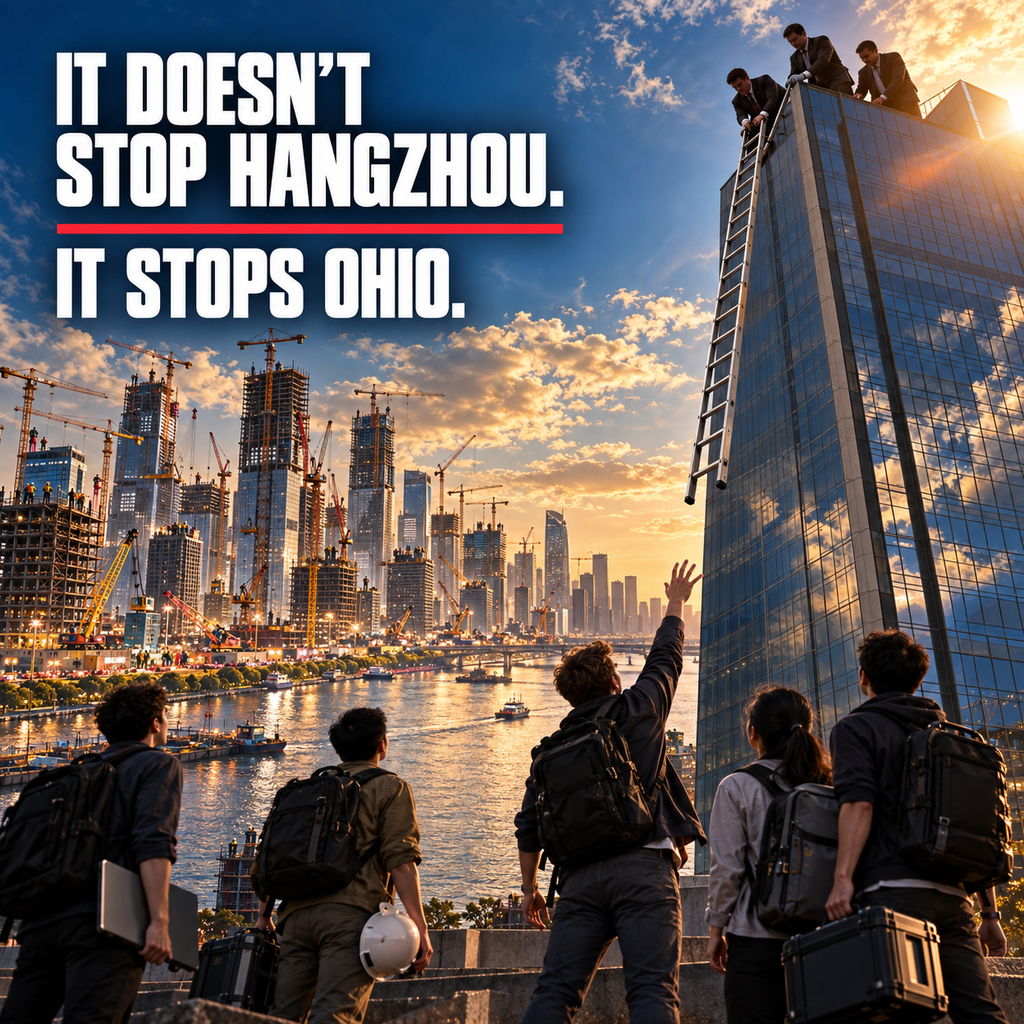
A ladder pulled up in San Francisco doesn’t stop anyone in Hangzhou.
It stops the people in Ohio.
The case for them, honestly
I owe them their best argument, so here it is.
Anthropic was founded on safety. That is not a marketing line; it is the origin story. Putting outside evaluators inside a lab with real access is real transparency, and it can embarrass the host as easily as it can protect it. And sincerity and self-interest are not opposites. A person can believe every word and still benefit from every word. Most people who ask for rules that favor them believe those rules are good. That is how it works.
And I am not here to tell you the dangers aren’t real. I wrote an entire book about these exact dangers. The risks in that essay are risks I lose sleep over.
So I am not going to argue about what is in Dario Amodei’s heart. I have no idea, and neither do you.
I am going to argue about what the rule does.
Does it bind the author, or the field? Does the cost land on everyone equally, or does it scale down to nothing for the biggest players? Does “pace” have a number, or is the number whatever the leaders are already doing?
Judge the proposal on that test. It fails on every line.
What to watch for
The next time a CEO at the top of the mountain asks for restraint, ask five questions.
Who does this bind? If the answer is “everyone but us, by law,” you have your answer.
Does it support open weights? Open models are the only reason anyone but a giant can build. If the proposal is quiet about them, that silence is the proposal.
Who writes the standards? If the companies being regulated are writing the rules, the rules will have a familiar shape.
Do the costs scale? A flat fee is a barrier to entry. A percentage is a tax. Watch which one they ask for.
Is the club open? “Democratic countries” sounds like a principle. Read the membership list. It is three companies and their friends.
The speed was never the problem
I am going to keep building. I said that in the book and I meant it. Refusing just moves the invoice to someone else’s desk.
But I am not going to pretend that a call for slowness from the fastest people on earth is a call for slowness.
It is a call for a finish line, drawn today, right behind the leaders, with everyone else told to stand still while the rules get written.
The genie is out. They know it. I know it. You know it.
The danger was never the speed. The tool is neutral. The purchase order isn’t.
The danger is who gets to set the pace, and who gets locked out of the room while they do.