The Fear of Job Replacement — A Natural but Misguided Concern
Artificial Intelligence is advancing faster than any technology shift we’ve seen in decades. Every week a new tool promises to automate tasks that once required hours of human brainpower. It’s no surprise that employees everywhere are wondering: “Is AI coming for my job?“
That concern is understandable. When a disruptive technology arrives, the first reaction is often fear — fear of losing relevance, fear of falling behind, fear of being replaced. But here’s the truth: AI isn’t here to erase human contribution — it’s here to elevate it.

As stated in the Vaultronix message, AI is here to stay; it won’t disappear, and yes, it will have an impact on jobs. But that impact is not doom — it’s opportunity. History shows that the people who adopt new tools early become the ones who lead industries forward.
Those who resist? They often struggle to catch up later.
The real question we should ask isn’t “Will AI replace my job?“
It’s “How will my job evolve — and how can I evolve with it?“
This mindset shift unlocks a powerful realization: we are not entering an age where machines take over.
We are entering an age where humans and machines work together, each amplifying the strengths of the other.
AI is not the enemy of the human workforce — fear is.
Technology Has Always Changed Work — Innovators Always Win
Every major leap in technology has sparked fear before it delivered opportunity. The printing press threatened scribes. Machines scared factory workers. Computer spreadsheets worried accountants. And yet, in every case, those who adapted became more valuable, not less.

Technology has never stopped progress — and it has never stopped creating new kinds of work.
We’ve seen what happens when organizations or workers refuse to adapt:
- Blockbuster dismissed streaming
- Borders downplayed e-commerce
- Nokia underestimated smartphones
These weren’t failures of talent — they were failures of adaptation.
Employees now stand at a similar crossroads. The rise of Artificial Intelligence isn’t a small upgrade. It’s a shift as significant as the internet itself. And once again, there will be two kinds of workers:
- Those who adopt new tools and rise
- Those who resist change and struggle to catch up
The lesson of history is simple:
In times of disruption, the adaptable become the unstoppable.
AI Replaces Tasks — Humans Remain Indispensable
It’s easy to assume AI will take jobs because we see it handling things we once did manually. But AI isn’t replacing people — it’s replacing tasks. Repetitive, time-consuming, low-creativity tasks that drain human potential.
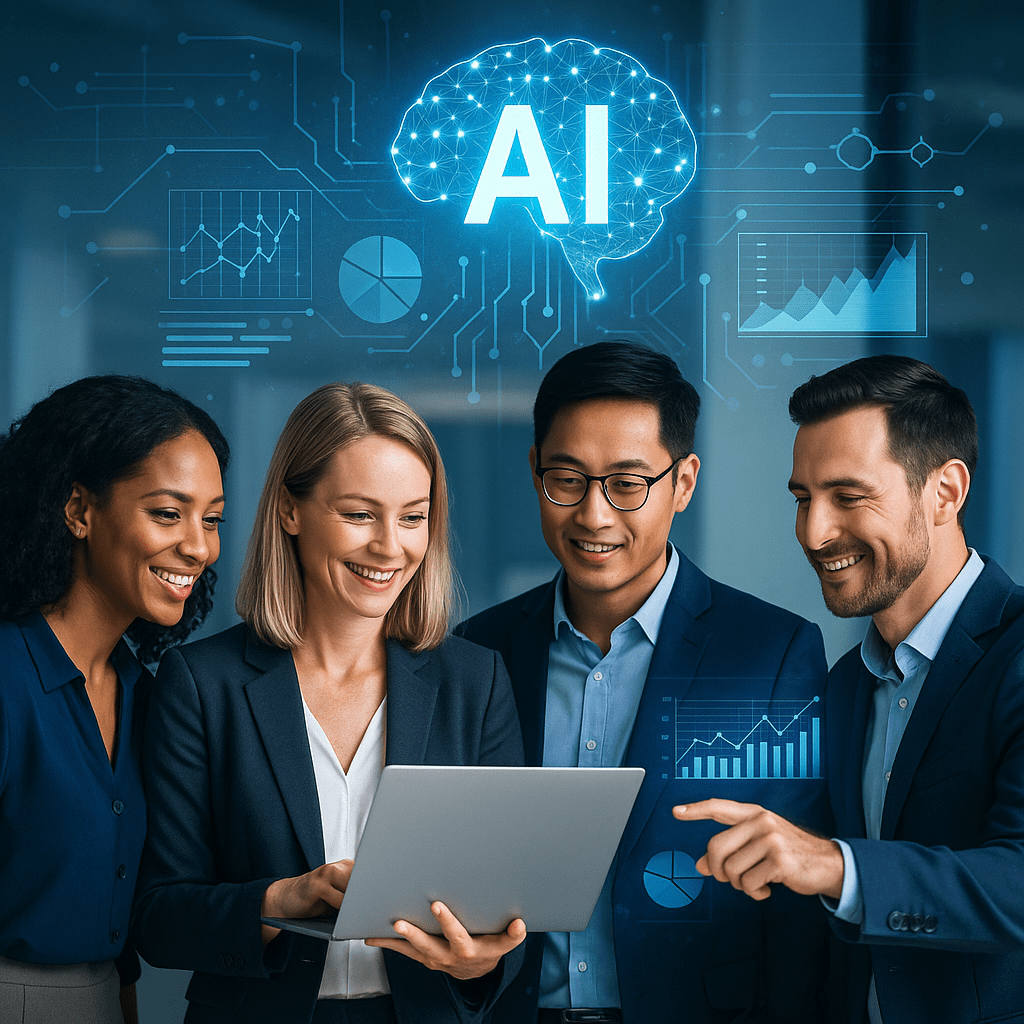
That means humans are freed to focus on what we do best:
- Creative thinking
- Emotional intelligence
- Complex problem-solving
- Strategic decision-making
- Relationship-building
In other words — the human parts of work.
AI doesn’t dream. It doesn’t empathize. It doesn’t understand nuance, humor, trust, or ethics. That’s why AI can assist in surgery — but cannot comfort a nervous patient. It can draft emails — but not persuade a skeptical customer. It can analyze data — but cannot imagine a new product.
The most valuable employees of the future will be those who use AI to amplify their human strengths.
In this new era, the job isn’t disappearing —
the job is evolving.
The Real Risk Isn‘t AI — It’s Refusing AI
The most significant job threat today isn’t the rise of Artificial Intelligence — it’s the decision to ignore it.
Multiple studies have already made this clear:
- Up to 49% of workers’ daily tasks could be automated using AI, according to Goldman Sachs
- Workers who use AI tools are reporting productivity boosts of 30–80%, depending on the job category
- Companies adopting AI are 11.5 times more likely to outperform competitors in revenue and market share (McKinsey & Co.)
These numbers show a simple truth:
AI-empowered employees don’t lose their jobs — they outperform, outgrow, and often out-earn those who avoid new tools.
But when employees reject AI out of fear, something dangerous happens:
- They become slower than peers
- They become less capable of handling modern workloads
- Their skills become outdated — fast
Meanwhile, organizations that embrace AI are restructuring roles around it:
✅ Employees who adopt AI → gain new responsibilities, advancement, leadership paths
❌ Employees who avoid AI → watch their roles shrink or vanish
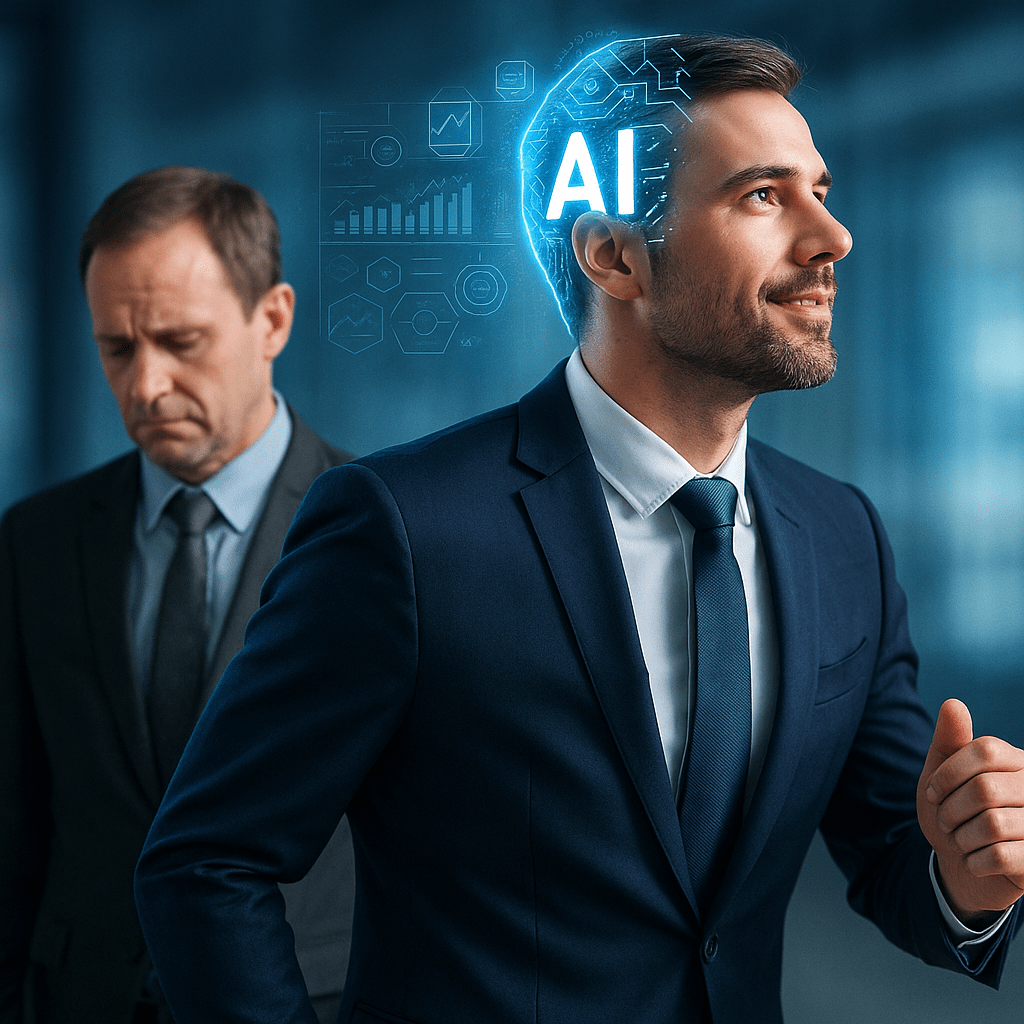
The divide is already forming — not between humans and machines, but between AI adopters and AI resisters.
And that gap will only widen.
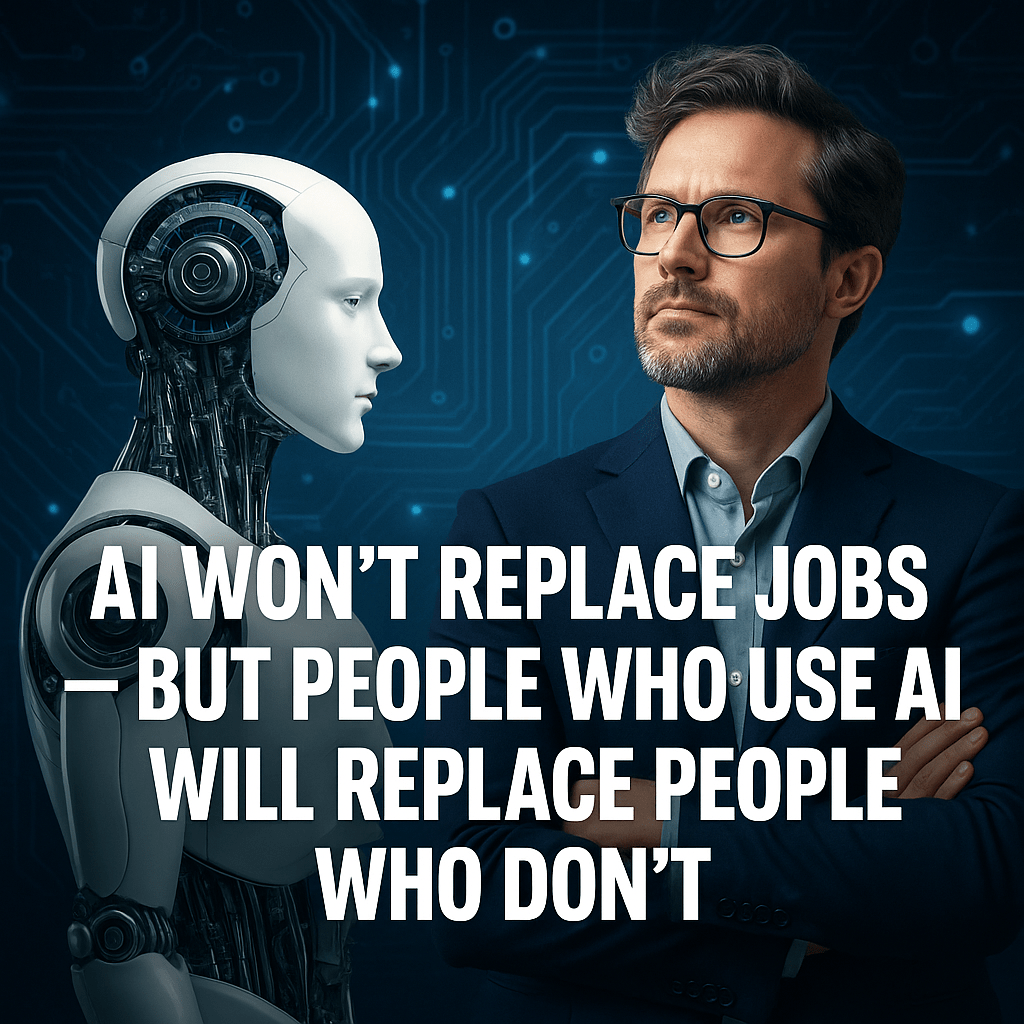
AI isn’t replacing humans.
Humans who use AI are replacing humans who don’t.
This is why the smartest professionals today are not asking:
“Will AI take my job?”
They’re asking:
“How can I use AI to make myself too valuable to replace?”
In the future of work, the most important skill isn’t coding or data science — it’s adaptability. The willingness to learn. The courage to evolve.
That is the real job security.
Shape the Future, Don’t Chase It
Artificial Intelligence is not a distant wave. It is already reshaping how we communicate, make decisions, sell products, support customers, and build brands. The future isn’t waiting for us to feel ready — it’s moving with or without us.
The question for every organization and every employee is simple:
Will we lead this change or fall behind it?

The workers who lean in — who learn to collaborate with AI — will become more efficient, more creative, and more essential. The companies that invest in AI skills today will be the ones outperforming their competitors tomorrow.
Practical steps to begin:
- Start Small
Experiment with AI tools that automate everyday tasks — email drafting, data summaries, scheduling. - Focus on Skill-Shifting, Not Job-Shifting
Encourage training that helps employees strengthen problem-solving, communication, and strategic thinking — the work AI cannot replace. - Celebrate Innovation
Reward individuals and teams who find smarter, faster ways to work using AI. - Build a Culture of Curiosity
Replace fear with exploration. When people feel supported, they feel empowered to improve.
Because here’s the truth:
AI does not eliminate the need for humans — it elevates the importance of what only humans can do.
Those who adapt will thrive. Those who ignore change will struggle to remain relevant.
Now is the moment to decide whether AI is something that happens to us — or something we use to grow.
The future of work isn’t man or machine.
It’s man with machine.
And when the two work together, potential becomes limitless.
Enterprise Agents
You’ve seen how Enterprise Chatbots is already transforming how the world’s smartest companies work. You’ve seen the data. The examples. The edge it creates.
Now it’s time to see what it can do for your business.
We’re offering a limited number of 100% free, no-obligation custom AI video —built specifically around your company, your workflows, and your goals.
✅ No sales pressure
✅ No generic walkthroughs
✅ Just real AI, solving real problems, in a way that’s tailored to your team
You’ll see:
- How our AI assistants can plug into your existing tools
- How they understand your projects, customers, and teams with perfect clarity
- How they automate, analyze, and act across meetings, emails, support, sales, and more
This is your opportunity to see, not just read about, the future of enterprise AI software.
But we can only do 7 of these custom videos per week—and they fill up fast.
👉 Claim yours before slots run out.
We’ll show you exactly how Intellic Labs can help you unlock the power of enterprise AI—and take full control of your future.

Want to See How AI Enterprise Could Work for Your Business?
At Intellic Labs, we’re offering a 100% free custom video demo—tailored to your company.
We’ll analyze your sales or support workflow and create a short, personalized video showing exactly how AI voice bots could fit into your business model. This isn’t some generic explainer. It’s crafted just for you, based on your industry, your pain points, and your goals.
✅ No catch
✅ No high-pressure sales
✅ Just a clear, custom vision of what AI can do for your business
If you’re even thinking about automation—this is the smartest 5 minutes you’ll invest all year. Click here to get started today.